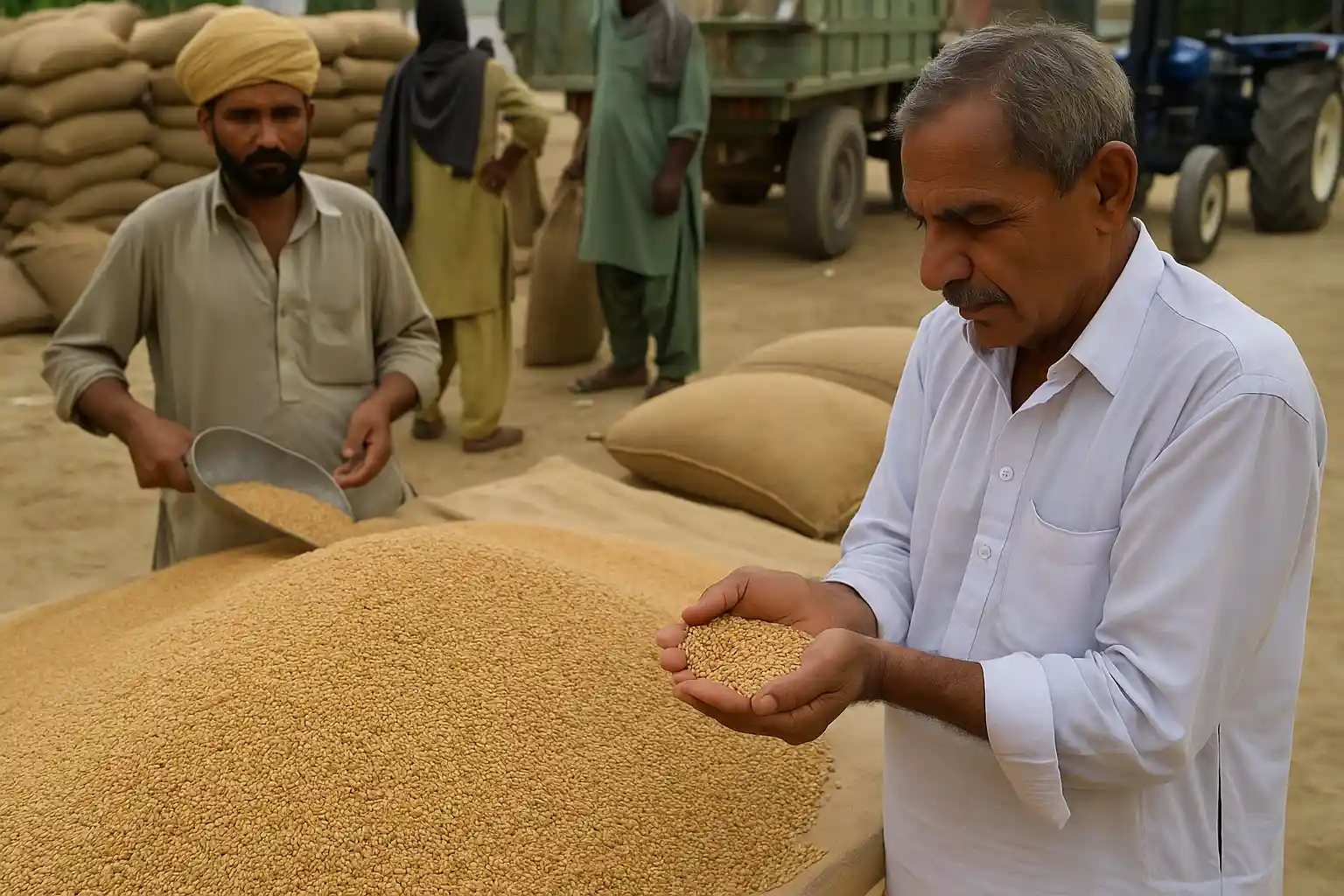
Sindh Wheat market is undergoing a major shift as flour millers and chakki owners are rapidly moving away from purchasing government wheat and instead relying heavily on the open market. The unexpected price difference, quality concerns, and slow government procedures have created a situation where official wheat stocks remain untouched—even as the new season 2025–26 has started.
This shift has pushed the Sindh Food Department to request the provincial cabinet to urgently revise the wheat release price to make government stock competitive again.
Government Wheat: Why Millers Are Not Buying?
Wheat millers say buying from government godowns has become costly and time-consuming. Although the official price is Rs 9,500 per 100kg, the final cost becomes more than Rs 10,000 after adding:
- Labour for loading and unloading
- Transportation charges
- Weighbridge deductions
- Miscellaneous hidden costs
In contrast, open-market wheat is available at Rs 9,400–9,500, including all expenses. This means millers can save money instantly while avoiding government complications.
Millers also complain that:
- Government grain bags often contain unclean or mixed wheat
- Weighbridges are faulty, causing quantity loss
- Advance challan payment adds extra hassle
- There’s no guarantee of wheat quality
This has resulted in millers abandoning official stocks altogether.
Check Also: NADRA Recruitment 2025 Online Apply for Latest Vacancies Announced
Open Market Wheat: Cleaner, Cheaper, Faster
Flour millers say open-market suppliers provide:
- 102kg bags delivered at the mill gate, leaving a net 100kg after wastage
- Cleaner, healthier grain
- Faster delivery
- No labour or transport charges
- Credit buying, giving millers financing flexibility
The private market is now the first choice for almost all millers across Sindh.
Sindh Government Considers a Big Price Cut
To clear old stocks, the Sindh Food Department has approached the cabinet to reduce the official release price from Rs 9,500 to Rs 8,000–8,500 per 100kg.
Food Secretary Bachal Rahpoto confirmed that lowering the price is necessary because:
- Old stock needs to be cleared
- New 2025–26 procurement of 1.2 million tonnes must begin soon
- Government is paying Rs 2 billion annual markup on old stocks
- A massive Rs 176 billion liability is still outstanding
Without a price cut, government wheat may remain unsold.
Quality Concerns Over Government Stocks
Millers and experts warn that some government stocks still include wheat from 2022–23, which was damaged during heavy rainfall.
Although the department claims fumigation, no third-party testing has been conducted. Out of 1.34 million tonnes in stock, only 1.27 million tonnes are considered usable.
Millers say open-market wheat is more reliable and consistent.
Wheat Consumption in Karachi
APFMA (South Zone) estimates:
- 250,000 tonnes per month wheat demand in winter
- 200,000 tonnes demand in summer
At present, Karachi’s supply is mostly being fulfilled by private traders instead of government godowns.
Wheat Sowing Update in Sindh
For the 2025–26 season:
- 43.6% wheat sowing completed (1.4 million acres) as of November 21
- Target: 3.2 million acres
- Farmers receiving subsidy worth Rs 24,700 per acre (DAP + Urea)
- Total cost of the programme: Rs 55 billion
This subsidy aims to ensure a strong wheat crop for next year.
Check Also: ZTBL Pakistan Jobs 2025 Online Apply – Latest Banking Vacancies Announced
Conclusion – Sindh Wheat Market Shifting Price Gap Explained
Sindh’s wheat market is shifting rapidly because millers find the open market more affordable, cleaner, and easier to deal with. Unless the government significantly reduces its wheat release price and improves transparency, millers will continue to prefer private suppliers.
The Sindh government’s final decision could reshape wheat availability, flour prices, and market stability in the coming weeks.