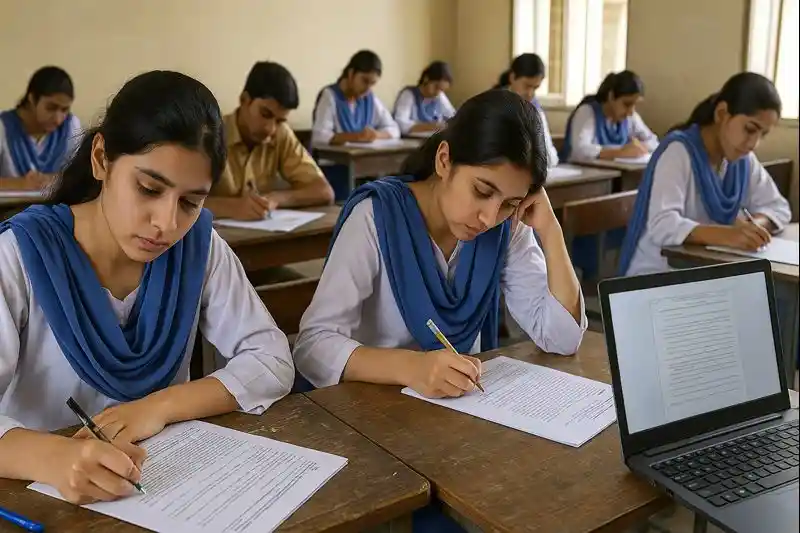
Sindh education boards have announced a significant reform in the examination system by introducing an e-marking system for matric and intermediate exams from 2026. This move marks a clear shift toward the use of technology in academic assessment and aims to address long-standing concerns related to transparency, fairness, and delays in result preparation.
The decision has been welcomed by education officials and experts who believe that digital marking can help improve the credibility of board examinations. With support from the Federal Board and the use of modern IT-based software, Sindh is preparing to modernise its examination checking process in a phased manner.
What Is E-Marking?
A Digital Approach to Exam Checking
E-marking, also known as electronic marking, is a system where students’ answer sheets are scanned and evaluated digitally instead of being checked manually in physical form. Examiners assess the scanned copies through a secure online platform using predefined marking criteria.
This system helps ensure:
- Uniform marking standards
- Reduced human error
- Greater accountability
- Secure storage of records
By shifting to e-marking, education boards can monitor the checking process more effectively and reduce complaints related to unfair assessment.
Check Also: TEVTA Launches Construction Sector Skills Courses 2025 in Sindh
Implementation From 2026
Matric and Intermediate Exams Included
According to officials, the e-marking system will be implemented from 2026 for both:
- Matric exams (Classes 9 and 10)
- Intermediate exams (Classes 11 and 12)
Initially, two to three papers of each examination level will be evaluated through e-marking. The remaining subjects may continue with manual checking during the early phase to ensure a smooth transition.
This gradual approach allows boards to identify challenges and improve the system before full-scale implementation.
Pilot Phase Already Completed
Mathematics Paper Tested in 2025
The transition toward digital marking has already begun. In 2025, the Mathematics paper for Classes 9 and 10 was checked using the e-marking system as a pilot project.
The pilot phase helped authorities to:
- Test the reliability of the software
- Assess examiner readiness
- Identify technical and training requirements
Officials described the pilot project as successful, which encouraged the expansion of the system to more subjects in 2026.
Role of the Federal Board
Software and Technical Assistance
The Federal Board of Intermediate and Secondary Education (FBISE) has provided critical support to Sindh boards in adopting the e-marking system.
Key contributions include:
- Provision of e-marking software
- Technical guidance for implementation
- Sharing of experience from previous digital initiatives
This collaboration ensures that Sindh boards can use a tested and standardised system rather than developing new software independently.
Read Also; SPSC Job Online Apply 2025 – Full Jobs List, Challan Form & Eligibility Criteria
Examination Forms and Exam Structure
No Change in Syllabus or Paper Pattern
While the checking system is changing, officials have clarified that:
- The syllabus will remain the same
- The paper pattern will not change
- Only the method of checking is being modernised
The submission of examination forms for Classes 9 and 10 is expected to begin soon, following the usual procedures.
Students are advised to focus on preparation as usual, as the new system will not affect exam difficulty or content.
Statement From IBCC
Shift Toward IT-Based Examinations
Executive Director of the Inter Board Coordination Committee (IBCC), Islamabad, Dr Ghulam Ali Mallah, confirmed that both the conduct of examinations and the checking of answer sheets will gradually move toward IT-based systems.
He stated that technology-driven reforms are essential to:
- Improve transparency
- Reduce irregularities
- Align Pakistan’s education system with international standards
His remarks reflect a broader national vision of digital transformation in education.
Benefits for Students
Fairness and Transparency
The introduction of e-marking is expected to bring multiple benefits for students across Sindh.
Major advantages include:
- Fair marking: Reduced examiner bias
- Accuracy: Consistent marking criteria
- Transparency: Digital records reduce disputes
- Faster results: Quicker completion of checking
Students who previously raised concerns about inconsistent marking may now see a more reliable assessment process.
Benefits for Education Boards
Improved Monitoring and Efficiency
Education boards will also gain from this reform.
Key benefits include:
- Centralised monitoring of examiners
- Reduced logistical costs related to paper handling
- Secure digital storage of answer sheets
- Easier handling of rechecking requests
With better oversight, boards can ensure accountability at every stage of the checking process.
Challenges in Implementation
Training and Infrastructure Requirements
Despite its advantages, the e-marking system also presents challenges that authorities must address.
These include:
- Training examiners to use digital platforms
- Ensuring stable internet connectivity
- Protecting data and preventing cyber risks
- Providing technical support during exams
To overcome these challenges, Sindh boards are expected to conduct training sessions, mock exercises, and system testing before the full rollout in 2026.
Check Also: PPSC New Jobs December 2025 – Advertisement No. 47/2025 Full Details Inside
Impact on Education Reforms
A Step Toward Digital Governance
The move toward e-marking aligns with broader government goals of:
- Digital governance
- Transparency in public institutions
- Technology-based service delivery
Education experts believe this reform could set an example for other provinces to follow.
Public and Expert Response
Positive Reaction From Stakeholders
Education officials, teachers, and policy experts have largely welcomed the decision.
Many believe that:
- Digital marking reduces corruption risks
- Standardised systems improve trust
- Technology-driven exams are the future
However, experts also stress the importance of proper planning to avoid technical issues during implementation.
Read More: Pakistan Navy Recruitment 2026 Online Apply – Complete Eligibility & Registration Guide
Future Expansion Plans
Possibility of Full Digital Checking
If the system proves successful, authorities may consider:
- Increasing the number of subjects under e-marking
- Expanding digital checking to practical exams
- Introducing automated result compilation
Such steps could further modernise the examination process in Sindh.
Conclusion – Sindh to Start E-Marking for Matric and Inter Exams in 2026
The decision to start e-marking for matric and intermediate exams in Sindh from 2026 represents a major milestone in the province’s education reforms. By adopting digital checking for selected papers, education boards aim to improve transparency, accuracy, and efficiency in examinations.
With successful pilot testing already completed and support from the Federal Board and IBCC, Sindh is moving steadily toward a more reliable and modern examination system. If implemented effectively, this reform can help restore confidence in board exams and improve the overall quality of academic assessment across the province.