
PASHA Budget 2026-27 Recommendations for Pakistan IT Industry
The Pakistan IT Industry Association, widely known as Pakistan Software Houses Association, has presented major recommendations for the Federal Budget 2026-27.
The organization wants the government to continue the existing 0.25% final tax regime for IT exporters and genuine freelancers in Pakistan for the next 10 years.
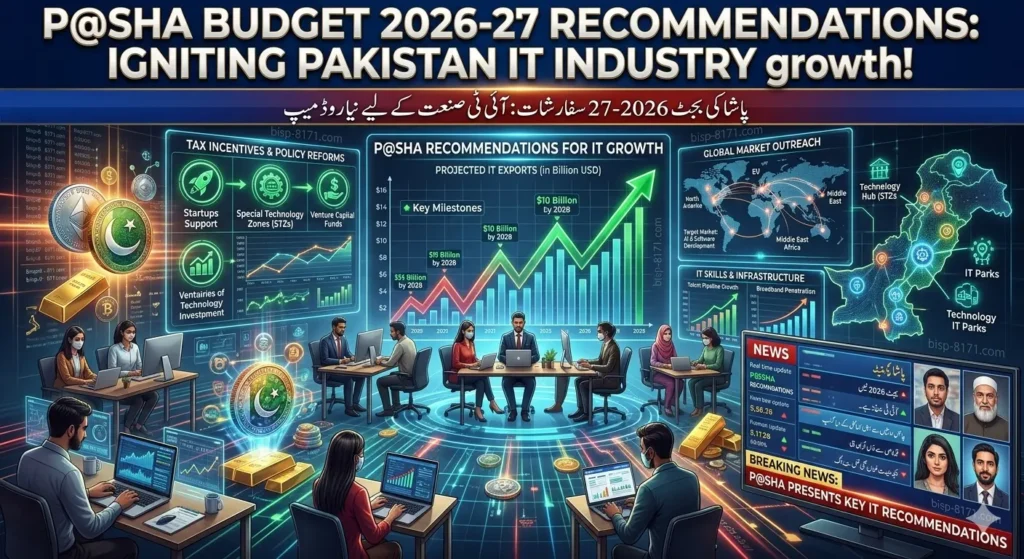
According to P@SHA, long-term policy stability is extremely important for the growth of Pakistan’s IT industry, software exports, and digital economy.
The recommendations have become a major discussion topic among freelancers, software companies, remote workers, and technology businesses across Pakistan.
Many people are now searching online for:
- P@SHA budget recommendations 2026
- Freelancer tax Pakistan
- IT export tax Pakistan
- 0.25 percent tax regime
- Pakistan freelancers tax
- P@SHA latest news
- IT industry Pakistan
- Federal budget 2026 IT sector
because the proposal may directly affect thousands of IT professionals and businesses.
P@SHA Wants 0.25% Tax Regime for IT Exporters
P@SHA has strongly recommended that Pakistan should continue the 0.25% final tax regime for registered IT exporters.
According to the organization, this low tax structure has helped Pakistan attract international clients and increase foreign exchange earnings.
The association believes policy continuity is necessary for:
- IT export growth
- International business confidence
- Foreign investment
- Digital economy expansion
- Technology sector stability
P@SHA says sudden tax policy changes can create uncertainty for local software companies and reduce Pakistan’s competitiveness in the global IT market.
Genuine Freelancers Also Included in Tax Proposal
P@SHA has clearly stated that genuine freelancers should also continue receiving the benefit of the simplified 0.25% final tax regime.
The organization explained that freelancers play a major role in Pakistan’s digital exports and youth employment.
According to reports, P@SHA fully supports maintaining a business-friendly environment for:
- Freelance developers
- Graphic designers
- Digital marketers
- Content creators
- Software engineers
- Online consultants
The association believes freelancers help bring foreign exchange into Pakistan and strengthen the country’s online economy.
Difference Between Freelancers and Remote Employees
One of the most important points in P@SHA’s recommendations is the distinction between genuine freelancers and full-time remote employees.
P@SHA believes these two groups should not be treated the same under tax laws.
According to the proposal:
- Genuine freelancers should continue paying 0.25% final tax
- Full-time remote workers earning fixed salaries from foreign companies should be taxed under regular salary slabs
The organization says this distinction is necessary to create fairness in the IT industry.
Why P@SHA Wants Separate Tax Rules for Remote Workers
According to P@SHA, many local IT companies face unfair competition because some remote workers operate outside formal business structures.
Registered IT companies spend money on:
- Office infrastructure
- Employee salaries
- Tax compliance
- Skill development
- Employee benefits
- Company operations
Meanwhile, some remote workers earning fixed foreign salaries may operate without similar business responsibilities.
P@SHA believes proper taxation of full-time remote employees can help create a level playing field for registered software companies in Pakistan.
Sajjad Syed Supports Formal IT Sector Growth
Sajjad Syed emphasized that formalizing the tax structure for remote employees can strengthen Pakistan’s corporate IT sector.
According to him, the policy may help:
- Protect registered IT businesses
- Improve economic documentation
- Encourage company registrations
- Increase formal business growth
- Support globally competitive IT firms
He also highlighted the importance of turning individual freelancers into fully structured businesses over time.
Global Freelancers Union Supports Freelancer Tax Benefits
Tufail Ahmed Khan also supported the recommendation regarding genuine freelancers.
He acknowledged that real project-based freelancers should continue benefiting from the simplified 0.25% final tax regime.
However, he agreed that remote employees earning fixed monthly salaries from foreign employers should be taxed differently.
This proposal has started strong debate within Pakistan’s freelance and remote work community.
Pakistan IT Industry Plays Important Role in Economy
Pakistan’s IT sector has become one of the country’s fastest-growing industries in recent years.
The industry contributes through:
- Software exports
- Freelancing income
- Foreign exchange earnings
- Employment generation
- Digital services
- Technology innovation
Thousands of Pakistani freelancers and software companies now work with international clients through online platforms and direct business partnerships.
The government has also been encouraging IT exports to strengthen the economy.
Why Tax Stability Is Important for IT Exporters
P@SHA believes long-term tax stability is necessary for attracting international business opportunities.
Technology companies often prefer countries with:
- Stable tax policies
- Simple regulations
- Easy business operations
- Digital banking support
- Investor confidence
Frequent tax changes can create uncertainty for foreign clients and software investors.
This is why P@SHA wants the 0.25% tax regime to continue for a full 10-year period.
Simplified Banking and Tax Filing Reforms Proposed
P@SHA has also demanded structural reforms to support Pakistan’s digital economy.
The organization wants:
- Simplified banking procedures
- Faster inward remittance systems
- Easier tax filing processes
- Better digital payment systems
- Reduced business barriers
According to the association, many freelancers and IT companies still face difficulties while receiving international payments.
Complex banking systems and slow remittance procedures can affect business growth and foreign exchange inflows.
Importance of Freelancing in Pakistan
Freelancing has become a major source of income for Pakistani youth.
Many students and professionals now work online in fields such as:
- Software development
- Web design
- Video editing
- Content writing
- SEO services
- Mobile app development
Pakistan is considered one of the top freelancing countries in the world.
Experts say supportive tax policies can help increase Pakistan’s digital exports even further.
Challenges Faced by Pakistan’s IT Sector
Although Pakistan’s IT industry is growing rapidly, businesses still face multiple challenges including:
- Banking restrictions
- Tax confusion
- Currency issues
- Internet problems
- International payment delays
- Regulatory uncertainty
P@SHA believes solving these problems is important for long-term growth of the technology sector.
Federal Budget 2026-27 Important for IT Industry
The upcoming Federal Budget 2026-27 is considered very important for Pakistan’s technology sector.
Freelancers, software houses, remote workers, and investors are closely watching government decisions regarding:
- Freelancer taxes
- IT export incentives
- Banking reforms
- Tax filing procedures
- Digital economy policies
Experts believe supportive policies can help Pakistan increase IT exports significantly over the next few years.
Public Reaction to P@SHA Recommendations
The recommendations have received mixed reactions online.
Many freelancers support continuation of the 0.25% tax regime because they believe low taxes encourage digital work and online income generation.
Some people also support separate taxation for fixed-salary remote workers to improve fairness within the industry.
However, others are concerned about possible future tax increases for remote professionals.
The debate is likely to continue until the final federal budget is announced.
Future of Pakistan’s Digital Economy
Experts believe Pakistan’s digital economy has huge growth potential if the government continues supportive policies.
Strong IT policies can help Pakistan:
- Increase exports
- Create jobs
- Improve foreign exchange reserves
- Support startups
- Develop global technology companies
Many economists believe the IT sector can become one of Pakistan’s strongest economic pillars in the future.
Conclusion
P@SHA’s Federal Budget 2026-27 recommendations focus on maintaining long-term tax stability for Pakistan’s growing IT sector.
The organization wants the government to continue the 0.25% final tax regime for IT exporters and genuine freelancers for the next 10 years.
At the same time, P@SHA proposes separate taxation for full-time remote employees earning fixed foreign salaries to create fairness for registered software companies.
The recommendations also highlight the need for banking reforms, easier remittance systems, and simplified tax procedures to support Pakistan’s digital economy and technology exports.