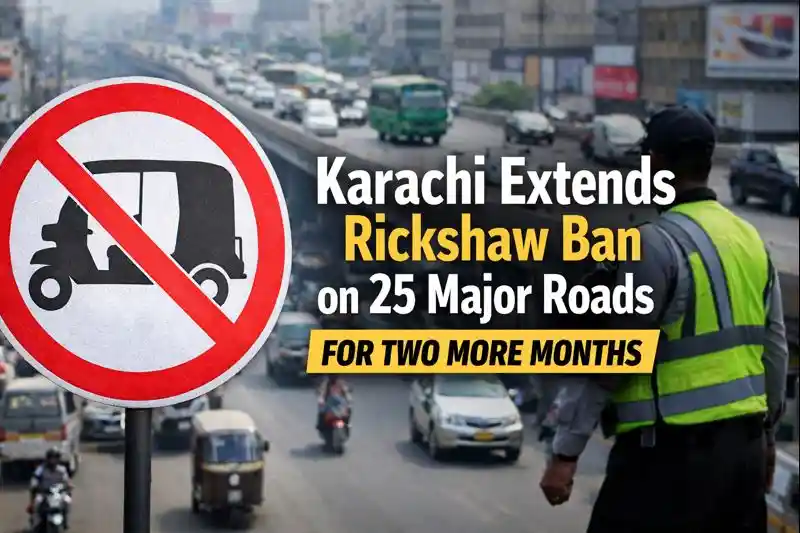
The Karachi administration has once again extended the ban on motor cab rickshaws across 25 important roads of the city. This decision has been taken to control heavy traffic congestion, improve road safety, and maintain better traffic flow in the city. The new extension will remain in place for the next two months and will continue till February 21, 2026, under Section 144.
The notification has been issued by the Commissioner Karachi after recommendations from the Karachi Traffic Police. Authorities believe that the presence of thousands of rickshaws on major city roads creates traffic pressure, leads to accidents, and causes long traffic jams during peak hours. Therefore, extending the restriction has been considered necessary.
Reason Behind Extending the Rickshaw Ban in Karachi
Karachi is Pakistan’s largest city, with millions of vehicles running on its roads daily. Rickshaws are one of the most commonly used transport options in the city, especially for short-distance travel. However, their large number, frequent stops, and slow movement often create huge traffic problems on busy roads.
According to the administration, the ban aims to:
- Control traffic congestion on main roads
- Reduce accident risks
- Improve traffic discipline
- Ensure smoother and faster flow of vehicles
- Support better traffic management in Karachi
Officials stated that this decision has been taken in public interest and for the safety of citizens. Karachi has been facing serious traffic challenges due to rapid urbanization, increasing population, and rising number of vehicles, so strict measures have become necessary.
Check Also: Pink Scooty Training Program Launched for Women in Sindh
Rickshaws Covered Under the Ban
Under the notification, 1+2 and 1+4 motor cab rickshaws are strictly prohibited from entering or operating on the designated restricted roads. These rickshaws usually carry passengers beyond their normal capacity, which not only creates traffic disturbance but also increases safety risks.
Police have been directed to ensure complete enforcement of this decision, and any violation will result in legal action.
Roads Where Rickshaws Are Banned in Karachi
The ban applies to 25 major roads and routes of Karachi. These are some of the busiest and most important traffic corridors in the city. Rickshaws will not be allowed to operate on the following roads:
- Shahrah-e-Faisal
- I.I. Chundrigar Road
- Shahrah-e-Quaideen
- Sher Shah Suri Road
- Shaheed-e-Millat Road
- Abdullah Haroon Road up to Do Talwar
- Shahrah-e-Firdousi
- Stadium Road
- Sir Shah Suleman Road
- Rashid Minhas Road
The restriction is also applicable on:
- Mauripur Road
- Shahrah-e-Pakistan
- Hub Road
- Qaidabad to Landhi 89
- University Road
- Korangi Road (Qayyumabad to Korangi Crossing)
- Orangi Road
- Super Highway to Malir Halt
- Surjani to Sohrab Goth stretch
These roads are key commercial, business, and residential routes. Every day, thousands of vehicles including private cars, buses, coasters, motorcycles, and goods transport travel through them. Therefore, authorities believe removing rickshaws from these routes will significantly help in traffic improvement.
Check Also: Government of Sindh: NICH Karachi Opens Medical Training Programs for 2025
Section 144 to Enforce the Ban
The ban has been enforced under Section 144, which allows the government to impose temporary restrictions in the interest of public safety, law and order, and smooth administration.
This means:
- Police are fully authorized to take strict action
- Cases can be registered against violators
- Rickshaws can be stopped and fined
- Vehicles can even be impounded if necessary
Authorities have clearly warned rickshaw owners and drivers to follow the orders and avoid entering the restricted roads. Police checkpoints and patrolling have also been increased in these areas to ensure compliance.
Karachi Traffic Police Support the Decision
The Karachi Traffic Police initially recommended extending the ban after reviewing the traffic situation in the city. According to officials, rickshaws often violate lane discipline, suddenly stop to pick passengers, and move slowly, which badly affects traffic flow on busy highways and boulevards.
Traffic Police believe that:
- Removing slow-moving vehicles from fast traffic corridors improves speed
- It reduces unnecessary traffic jams
- It helps in emergency movements
- It allows better control during rush hours
- It decreases accident chances
The administration agreed with these observations and approved the extension after reviewing the recommendations.
Impact on Citizens and Transport System
While the ban may improve traffic conditions, it also affects thousands of citizens who depend on rickshaws for daily travel. Many people prefer rickshaws because they are easily available, affordable, and convenient for short distances. With this ban, commuters may face difficulties on restricted roads and may need to shift to buses, taxis, or ride-hailing services.
However, authorities believe that public inconvenience is temporary, but the benefits are long-term. They suggest that better traffic flow, reduced congestion, and safer roads are more important for the city’s future. There are also expectations that this step will encourage the use of modern and organized transport services.
Strict Action Against Violators
Authorities have made it very clear that the restriction is not just an announcement — it will be strictly implemented. Police have been instructed to immediately stop any rickshaw found violating the ban. Legal cases may be registered under Section 144, and penalty action will be taken accordingly.
This strong warning shows that the administration is serious about traffic improvement and wants to make sure rules are followed without exception.
Karachi’s Ongoing Traffic Challenges
Karachi has been dealing with traffic chaos for many years. Some of the main reasons include:
- Overpopulation
- Lack of modern transport system
- Encroachments on roads
- Unplanned urban growth
- Violation of traffic rules
- Poor awareness among road users
In this situation, any step that helps reduce congestion and improves management is seen as necessary. The rickshaw ban is part of a broader effort to make Karachi’s traffic system more organized.
Check Also: Rs. 964.4 Million Approved for New Public Transport Buses in Sindh
Conclusion – Karachi Extends Rickshaw Ban on 25 Major Roads for Two More Months
The extension of the rickshaw ban on 25 major roads of Karachi for another two months shows that authorities are serious about improving the city’s traffic system. With Section 144 in place, strict enforcement is expected, and violators will face action. While some citizens may face inconvenience, the government believes the decision will result in safer, smoother, and better-managed traffic across Karachi.
If properly implemented, this step can help reduce accidents, save travel time, and make roads more disciplined. Karachi residents now wait to see how effectively the ban is enforced and whether it truly brings the expected improvement in traffic flow.