FBR Revenue Shortfall 2026 Raises Concerns Before Pakistan Budget
Pakistan’s Federal Board of Revenue (FBR) is facing a major revenue shortfall in May 2026 as tax collection remained far below the official monthly target.
According to sources, the FBR collected around Rs. 960 billion against a target of Rs. 1.15 trillion during May 2026. This created a large revenue gap of approximately Rs. 190 billion before the month ended.
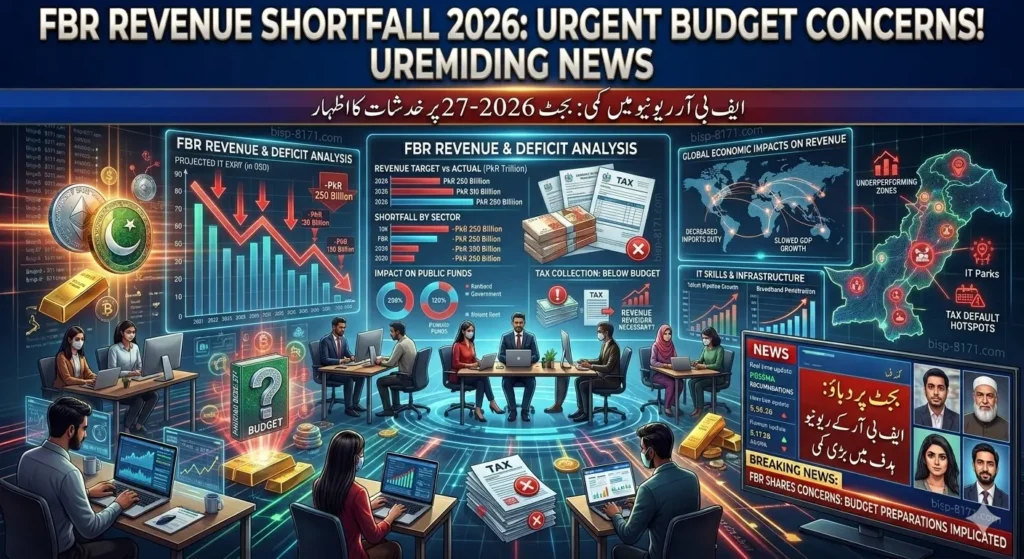
Officials expect around Rs. 5 billion more revenue to be collected on May 31, which may increase total collections to Rs. 965 billion. However, even after this increase, the FBR is still expected to miss its target by a wide margin.
The latest revenue situation has increased financial pressure on the government ahead of the Federal Budget 2026-27.
Many people are now searching online for:
- FBR revenue shortfall 2026
- Pakistan tax collection
- FBR latest news
- Pakistan budget 2026
- FBR collection target
- Pakistan economy update
- Federal budget Pakistan
- Revenue shortfall Pakistan
because the issue may directly affect future taxes, inflation, and government spending.
FBR Collected Rs. 960 Billion Against Rs. 1.15 Trillion Target
According to available figures, the FBR was assigned a monthly revenue collection target of Rs. 1.15 trillion for May 2026.
However, by the latest count, the tax authority managed to collect only Rs. 960 billion.
This means:
- Monthly target: Rs. 1.15 trillion
- Revenue collected: Rs. 960 billion
- Revenue gap: Rs. 190 billion
Officials believe some additional collections may still arrive before the month officially closes, but the gap remains extremely large.
Economic experts say the weak performance highlights ongoing problems in Pakistan’s tax collection system.
Additional Revenue Expected on May 31
Sources say FBR officials expect approximately Rs. 5 billion more revenue on the final day of May.
If this amount is added, the total monthly collection may reach Rs. 965 billion.
Even then, the FBR would still remain significantly below its assigned target.
Experts believe the shortfall may create additional pressure during upcoming negotiations related to:
- Federal budget planning
- IMF discussions
- Fiscal targets
- Revenue reforms
- Tax policy changes
Overall FBR Revenue Shortfall May Cross Rs. 860 Billion
The weak May performance is also expected to worsen the overall revenue picture for the current fiscal year.
According to sources, the cumulative revenue shortfall for the first eleven months of the fiscal year could exceed Rs. 860 billion by May 31.
This means the government may struggle to fully achieve its annual revenue targets.
The growing revenue gap has become one of the biggest economic concerns in Pakistan ahead of the next budget announcement.
Why FBR Revenue Collection Is Important for Pakistan
The Federal Board of Revenue plays a central role in Pakistan’s economy because it is responsible for collecting taxes used to run the country.
Tax revenue is needed for:
- Government salaries
- Development projects
- Healthcare
- Education
- Infrastructure
- Defense spending
- Public welfare programs
When tax collection remains lower than expected, the government may face difficulties managing expenses and fiscal deficits.
Pakistan Facing Economic Pressure Before Budget 2026-27
The latest FBR revenue shortfall comes at a very sensitive time because Pakistan is preparing the Federal Budget 2026-27.
The government is currently working on:
- Revenue targets
- Tax reforms
- Budget allocations
- IMF negotiations
- Development spending plans
A large revenue gap may force policymakers to consider additional taxation measures or spending adjustments.
This is why the latest FBR figures are receiving strong attention from economists and financial analysts.
Possible Reasons Behind Low Tax Collection
Economic experts believe several factors may be affecting tax collection performance in Pakistan.
Some major reasons may include:
- Slow economic activity
- Reduced imports
- Inflation pressure
- Weak business growth
- Tax compliance problems
- Smuggling and undocumented economy
Experts say difficult economic conditions can reduce consumer spending and business activity, which directly affects tax collection.
IMF Pressure and Revenue Targets in Pakistan
Pakistan is also facing pressure from the International Monetary Fund (IMF) to improve tax collection and reduce fiscal deficits.
The IMF has repeatedly asked Pakistan to:
- Expand the tax base
- Improve documentation
- Increase revenue collection
- Reduce tax evasion
- Strengthen fiscal management
Because of this, missing revenue targets may complicate future economic negotiations and budget planning.
Impact of Revenue Shortfall on Common People
Although revenue collection may seem like a technical government issue, it can directly affect ordinary citizens.
Lower tax collection can lead to:
- Higher future taxes
- Inflation pressure
- Reduced development spending
- Delayed public projects
- Utility price increases
- Economic uncertainty
Experts warn that governments often introduce new taxes or increase existing taxes when revenue targets are missed.
This is why businesses and consumers closely watch FBR collection reports.
FBR Collection Challenges Continue in Pakistan
Pakistan’s tax system has faced challenges for many years.
Some common problems include:
- Narrow tax base
- Informal economy
- Weak enforcement
- Tax evasion
- Complex regulations
- Low documentation
Despite reforms and digital systems, revenue authorities still struggle to bring many sectors fully into the tax net.
Experts believe long-term structural reforms are necessary to improve sustainable revenue growth.
Pakistan Budget 2026-27 May Include New Tax Measures
Financial experts believe the upcoming federal budget may include additional revenue measures to reduce the growing fiscal gap.
Possible areas under discussion may include:
- GST changes
- New withholding taxes
- Retail sector taxation
- Property tax adjustments
- Digital economy taxation
- Import duties
The government may also focus on increasing documentation and expanding the formal economy.
Business Community Watching FBR Situation Closely
Businesses across Pakistan are closely monitoring the FBR revenue situation because future tax decisions may affect commercial activity.
Industries are concerned about:
- Increased tax burden
- Higher compliance costs
- Import restrictions
- Business slowdown
- Economic uncertainty
At the same time, government officials are trying to balance revenue generation with economic stability.
Public Concern Growing Over Pakistan Economy
The latest revenue figures have increased public discussion about Pakistan’s overall economic condition.
Searches related to:
- Pakistan economy latest news
- FBR shortfall 2026
- Pakistan tax collection crisis
- Federal budget updates
- IMF Pakistan news
have become increasingly popular online.
People want to know whether future taxes, inflation, and government policies may become more difficult in the coming months.
Experts Call for Tax Reforms and Economic Stability
Economists believe Pakistan needs stronger reforms to improve revenue collection without creating excessive burden on the public.
Suggested reforms include:
- Broadening the tax base
- Improving digital documentation
- Simplifying tax systems
- Reducing corruption
- Encouraging business growth
- Supporting exports
Experts say economic growth and stable business activity are essential for improving sustainable tax collection.
Conclusion
The Federal Board of Revenue is facing a major revenue shortfall of Rs. 190 billion in May 2026 after collecting only Rs. 960 billion against a target of Rs. 1.15 trillion.
Even with expected additional collections on May 31, the tax authority is likely to miss its target by a significant margin.
The weak performance may push the cumulative fiscal year revenue shortfall beyond Rs. 860 billion, increasing financial pressure on the government ahead of the Federal Budget 2026-27.
As Pakistan prepares new fiscal policies and budget plans, the latest FBR figures highlight the growing challenges facing the country’s economy and tax system.