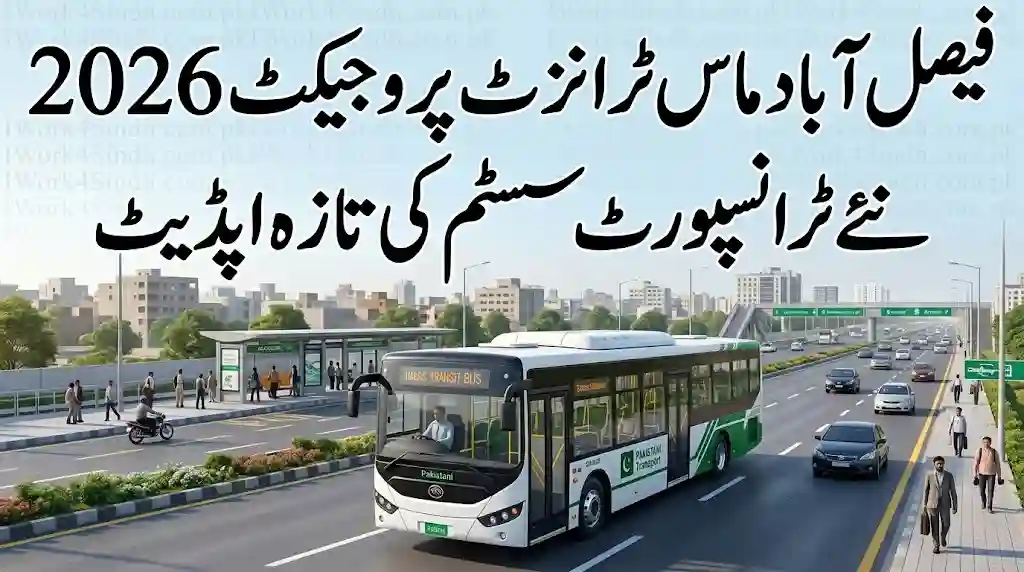
Faisalabad Mass Transit Project 2026 – Latest Transport System Update
Faisalabad is one of Pakistan’s biggest industrial and commercial cities. Every day, thousands of students, workers, business people, and families travel across the city for work, school, and daily errands. As the population grows, roads get busier, and daily commuting becomes harder. This is why the Faisalabad Mass Transit Project 2026 has become one of the most talked-about developments in the city.
The project aims to give Faisalabad a modern, organized, and reliable transport network. For a city known for its textile industry and busy markets, a strong public transport system is not just convenient, it is necessary. In this article, we will explain the latest known details about the Faisalabad Mass Transit System, including the route, stations, cost, and current progress.
Faisalabad Mass Transit Project 2026 Latest Update
The Faisalabad mass transit project latest update shows that Punjab authorities are actively working to move this project forward. The Punjab Chief Minister has directed the relevant departments to speed up work and ensure timely completion.
According to official briefings, the planned system is around 20.5 kilometres long and will include 21 stations. A separate route update, shared in July 2026, described a 20.3-kilometre corridor with 21 stations and an estimated cost of around Rs79 billion.
It is normal for such figures to change slightly as planning, design, and approvals move forward. Readers should treat these numbers as the latest reported estimates rather than final, unchangeable facts.
Faisalabad Metro Bus Project Route
The proposed Faisalabad Metro Bus route has been designed to connect major parts of the city. Reports indicate that the route will begin from the Tahir Pura area, near Faisalabad International Airport on Jhang Road, and continue toward Faisal Town on Jaranwala Road.
This corridor has been planned to link important residential, commercial, educational, and transport hubs across Faisalabad, making daily travel easier for a large number of people.
Some of the major areas reported along the proposed corridor include Airport Chowk, Air Avenue, Mansoor Malangi Road, GC New Campus, Saifabad Mor, Gulfishan Colony, Ayub Colony, Pratap Nagar, GCU Main Campus, Rajbah Road, Montgomery Bazaar, Rail Bazaar, Railway Station, Abdullahpur, D-Ground, Al-Najaf Colony, Kahkashan Colony, Usmanabad, Bukhari, and Faisal Town.
Faisalabad Metro Bus Stations
One of the most important parts of this project is the network of Faisalabad Metro Bus stations. The project is currently planned with 21 stations spread across the corridor.
Dedicated stations can make a big difference for daily commuters. They help organize boarding and exiting, reduce crowding, and generally make the travel experience smoother and safer.
It is important to note that these stations are still part of the planned infrastructure. They are not yet fully operational, and construction and development work is ongoing along different parts of the route.
Faisalabad Orange Line and Red Route
As planning has progressed, two corridor names have appeared in reports. The Jaranwala Road corridor has been referred to as the Faisalabad Orange Line, while the Jhang Road corridor has been described as the Faisalabad Red Route.
These names represent parts of the wider planned mass transit network for the city. They should be understood as proposed corridor names rather than confirmed, fully operational transport lines, unless officially confirmed by the relevant authorities.
Faisalabad Mass Transit Project Cost
The Faisalabad Mass Transit Project cost has been reported at approximately Rs79 billion, based on the latest available estimates. Earlier discussions mentioned slightly different figures as the project moved through various planning stages.
This is common with large infrastructure projects. Costs can shift during detailed design, government approval, procurement, and construction phases. Readers should always check for the most recent official updates rather than relying on older cost estimates.
Project Infrastructure and Features
The Faisalabad transport system is expected to include several modern features once completed. These include dedicated mass transit infrastructure, modern passenger stations, and elevated sections in parts of the route.
Other expected features include bus depots, improved traffic management around major roads, and better passenger access points. Officials have also highlighted plans for elevators and accessibility facilities, along with green belts and urban forestry near open spaces along the corridor.
Earlier official briefings described approximately 11.3 kilometres of the system as elevated, supported by 11 elevated stations. As with other project details, exact figures may be refined as implementation continues.
How the Project Can Help Faisalabad
A completed Faisalabad modern transport system could bring several real benefits to the city:
- Reduced Faisalabad traffic congestion on major roads
- Faster and more predictable daily travel
- Better Faisalabad public transport for all income groups
- Easier and safer commuting for students
- Improved connectivity for daily wage workers and employees
- Better access to markets, factories, and business areas
- A more organized and structured urban transport network
- Improved facilities for women, senior citizens, and differently-abled passengers
- Possible environmental benefits from reduced private vehicle use
- Support for future urban growth and planning
Electric and Eco-Friendly Transport in Punjab
Punjab’s broader transport strategy has increasingly focused on modern and eco-friendly options, including electric buses in other parts of the province. This reflects a wider push toward cleaner urban transport across Punjab.
At this stage, it should not be assumed that the entire Faisalabad Mass Transit System will run on electric vehicles unless this is officially confirmed by the relevant transport authorities.
Current Status of Faisalabad Mass Transit Project
As of 2026, the Faisalabad Mass Transit Project 2026 is best described as a project that is planned, approved in parts, and under active development. Route planning has been finalized by the Punjab Mass Transit Authority, and construction activity has been reported along sections of the corridor, particularly on Jhang Road.
Provincial authorities have reviewed the project’s progress and directed departments to maintain the construction schedule. However, the system as a whole is not yet fully operational, and updates should be tracked through official government sources.
Faisalabad Transport System Future
If completed as planned, the Faisalabad transport project 2026 could reshape how people move around the city for years to come. Beyond the main corridor, future development may include feeder routes, additional bus depots, upgraded roads, and better connections with existing transport options.
Over time, this could support smoother travel between residential areas, educational institutions, industrial zones, and commercial centers across Faisalabad.
Frequently Asked Questions About Faisalabad Mass Transit Project 2026
What is the Faisalabad Mass Transit Project 2026?
It is a planned mass transit initiative aimed at giving Faisalabad a modern, organized public transport corridor connecting major parts of the city.
What is the Faisalabad Metro Bus Project cost?
Recent reports estimate the cost at around Rs79 billion, though figures may change as the project develops.
How long is the Faisalabad Mass Transit System?
Reported figures place the corridor length between approximately 20.3 and 20.5 kilometres, depending on the source and stage of planning.
How many Faisalabad Metro Bus stations are planned?
The project currently includes plans for 21 stations along the corridor.
What is the Faisalabad Metro Bus route?
The route is planned to run from Tahir Pura, near Faisalabad International Airport on Jhang Road, to Faisal Town on Jaranwala Road, connecting several key areas of the city.
Faisalabad Transport System Conclusion
The Faisalabad Mass Transit Project 2026 represents an important step toward modernizing urban transport in one of Pakistan’s most active industrial cities. While parts of the project are still under construction and some details may change, the overall goal is clear: to reduce traffic pressure, improve daily commuting, and provide a more reliable public transport option for residents.
If completed successfully, this project could significantly improve mobility for students, workers, and families across Faisalabad, while supporting the city’s long-term urban development goals.