Sindh Internship Program 2026 for Graduates – I Work for Sindh Portal Update
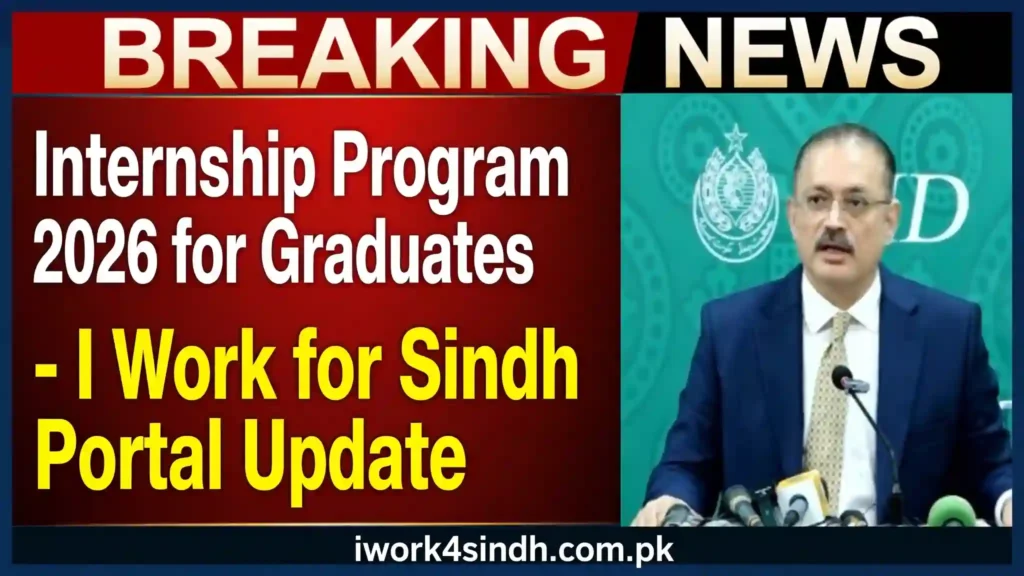
Young job seekers in Sindh have received two pieces of news at once. The Sindh government says it will start an internship program for degree holders in November 2026, and provincial minister Sharjeel Inam Memon has released fresh numbers for the I Work for Sindh portal. Together, they point to a province-wide push on graduate employment, practical training, and skills development.
Sindh Internship Program 2026 for Graduates in Brief
The headline is simple. From November, the Sindh government plans to open an internship program meant for university graduates and degree holders. The announcement was made on October 29, 2026, which means the launch is only days away.
The minister linked the internship program to the wider I Work for Sindh initiative. The portal is the province’s main digital employment platform, and the government wants it to be the place where young people find jobs, training, and now internship opportunities. Whether applications will go through the portal has not been confirmed, so treat that as a likely direction, not an official instruction.
I Work for Sindh Portal Update: What the Numbers Say
The minister shared four figures that describe how the portal is performing:
- More than 5.3 million visits recorded on the platform
- 26,677 active jobs available at present
- About 4,800 candidates who completed courses over the last three months
- Roughly 6,000 candidates now enrolled in training programs
A visit is not the same as a registered user, so the 5.3 million figure should be read as traffic, not as the number of people who found work. Even so, it shows that job seekers across Sindh are using the portal heavily.
The count of active jobs matters more for graduates. A list of 26,677 vacancies suggests the portal carries a real volume of job openings, not just a handful of sample posts. The announcement does not say how many of these are government jobs and how many are private sector jobs, and it does not break them down by city, department, or qualification.
Course Completion and Ongoing Training
The training figures show the other half of the portal’s work. The 4,800 candidates who completed courses in three months have now finished their skill development and may be ready to apply for jobs or internships. The 6,000 candidates still in training are expected to finish in the coming months.
The minister did not name the courses, give their duration, or say which trades and subjects were covered. Readers who want to join a course should check the course list on the portal itself rather than rely on social media posts.
Next Phase of Physical Short Courses
Besides the internship, the minister announced that the next phase of physical short courses for skilled individuals is on the way. The key detail is that these courses will be run in collaboration with companies.
This is a notable change in approach. A training course designed alone by a government body can drift away from what employers want. When companies help design the curriculum, the course is more likely to teach market-relevant skills, the abilities that hiring managers actually ask for.
Two cautions apply. First, the announcement does not promise job placement after a course. Second, the names of the partner companies, the course fees, and the registration process have not been shared. Candidates should wait for the official notice before making plans around any particular course.
Why Graduates Struggle Without Experience
Many fresh graduates hit the same wall: employers ask for experience, but nobody gives a first chance. An internship is designed to break that loop. Even a short stint helps a graduate learn how an office runs, how to meet deadlines, and how to work with a team.
For a degree holder in Sindh, an internship can also help in these ways:
- It strengthens the CV with real work experience
- It creates links with supervisors and colleagues
- It builds confidence before job interviews
- It helps in choosing the right career path
These are general benefits of internships. The specific advantages of the Sindh program depend on the departments and organizations that host the interns, and those are not known yet.
How the Internship and the Portal May Work Together
The minister mentioned the internship program and the I Work for Sindh figures in the same announcement. That suggests the government sees them as parts of one employment strategy: the portal brings together job listings and training, and the internship adds an entry-level step for graduates with no work history.
A likely path for a young person would be to register on the portal, complete a short course, take an internship, and then apply for a job. This is only a reasonable reading of the announcement. No official source has described such a pathway, so do not treat it as a fixed rule.
What Has Not Been Announced Yet
The report was short, and several important questions remain open:
- The exact launch date in November
- Eligibility criteria, including age limit and degree level
- Any stipend or allowance for interns
- The length of the internship
- The application method and official link
- The host organizations and departments
- The number of available seats
Please do not trust any website, WhatsApp message, or Facebook page that claims to know these details before the government publishes them.
Preparing Early: A Practical Checklist
You can prepare now without waiting. Start by opening the I Work for Sindh website and making sure your profile is complete and correct. Next, gather the documents that government programs usually ask for: your CNIC, educational certificates, transcripts, domicile, and a recent photograph. Scan each one clearly and save it in a single folder.
Then write a one-page CV that lists your degree, final-year project, software skills, and any volunteer or society work. If you have spare time before November, take a free online course in MS Office, English communication, or a skill linked to your field. These small steps can put you ahead of applicants who begin from scratch.
Avoiding Scams and Fake Offers
Large government schemes attract fraudsters. Remember a few simple rules:
- No genuine government internship should require you to pay money to secure a place
- Never share your CNIC photo, bank account details, or OTP code with unknown people
- Check every link carefully, because fake websites copy real names
- Rely on official Sindh government announcements and the portal itself
If something looks suspicious, report it and warn your friends.
Frequently Asked Questions
When does the Sindh internship program 2026 begin?
The government says it starts in November 2026. A specific day has not been given.
Who is the internship for?
It is aimed at degree holders. The detailed eligibility rules are awaited.
Is the I Workfor Sindh portal free to use?
The announcement does not mention fees, so check the official portal for current information.
Will interns be paid?
No stipend has been confirmed.
How many jobs are on the portal?
The minister said 26,677 active jobs are listed at present.
Conclusion
The Sindh internship program 2026 for graduates, combined with the latest I Work for Sindh portal update, shows the provincial government putting employment, training, and practical experience at the center of its youth policy. The figures on visits, jobs, and course completions are encouraging, but the internship details are still missing. Keep your profile and documents ready, follow official sources, and apply only when the notification is out.