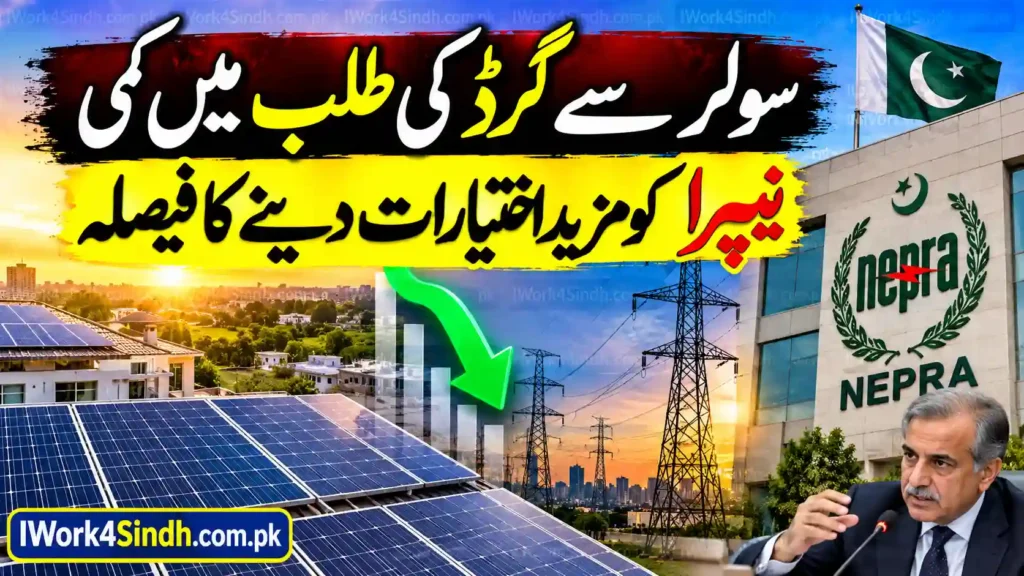
Govt Plans to Empower NEPRA as Rising Solar Adoption Reduces Grid Demand
Pakistan is seeing a major change in the way people produce and use electricity. The rapid growth of rooftop solar systems, rising electricity prices, and growing interest in renewable energy are reducing the amount of electricity many consumers purchase from the national grid. This change has created new challenges for the power sector and increased the importance of the National Electric Power Regulatory Authority (NEPRA).
The government is now focusing on strengthening the regulatory role of NEPRA as the country moves toward a more decentralized energy system. The regulator is expected to play a key role in balancing the interests of solar consumers, electricity distribution companies, and the wider national power system.
Solar Adoption Is Changing Pakistan’s Power Market
Solar energy has become increasingly popular in Pakistan because electricity costs have increased significantly over recent years. Many households, businesses, factories, and agricultural users have installed solar panels to reduce their dependence on expensive grid electricity.
The growth of distributed solar generation means that consumers are no longer only electricity buyers. Many solar users can also produce electricity for their own consumption and, under applicable regulatory arrangements, supply surplus power to the distribution network.
This has created the concept of the prosumer, a consumer who can both produce and consume electricity.
The rapid increase in rooftop solar is changing traditional electricity demand patterns. During sunny hours, solar-equipped consumers may use much less electricity from the grid. As a result, grid demand can fall even when overall electricity needs remain high.
Why the Government Wants Stronger Regulation
Pakistan’s electricity system has traditionally depended heavily on centralized power generation and distribution networks. Power plants produce electricity, transmission companies transport it, and distribution companies supply it to consumers.
The growing use of distributed solar energy is changing this structure.
When thousands of consumers generate electricity independently, the power system needs new rules for billing, grid connections, electricity exports, technical standards, and system stability.
This is where NEPRA becomes increasingly important.
The authority already regulates the electricity sector and has introduced new rules covering prosumer arrangements. NEPRA’s legal record shows that the NEPRA Prosumer Regulations 2026 were notified in February 2026, followed by further amendments in April and August.
These regulatory changes show how quickly Pakistan’s electricity market is evolving.
Shift From Traditional Net Metering to Net Billing
One of the biggest changes in Pakistan’s solar market has been the move toward net billing.
Under the earlier net-metering model, solar consumers could export excess electricity to the grid and receive an adjustment against electricity consumed from the distribution company.
The newer framework separates electricity imported from the grid from electricity exported by a solar consumer. According to a Competition Commission of Pakistan study, the 2026 framework uses a monetary settlement mechanism, with electricity imported from the grid billed at the applicable retail tariff while exported electricity is purchased at the applicable national average energy purchase price.
This represents a major change for people considering solar investment in Pakistan.
The government has argued that changes are needed because the rapid expansion of rooftop solar can affect the finances of distribution companies and the wider power system. Earlier government statements also highlighted concerns about the growing financial burden associated with increasing numbers of net-metering consumers.
Falling Grid Demand Creates New Challenges
The growing number of solar-powered homes can reduce electricity purchases from the grid during daylight hours. While this is positive for consumers and the environment, it can create financial and operational challenges for traditional utilities.
Distribution companies still have to maintain poles, wires, transformers, substations, meters, and other infrastructure even when some customers purchase less electricity from the grid.
This means that lower electricity sales do not necessarily result in the same reduction in fixed system costs.
The issue becomes more important when a large number of consumers install solar systems. The electricity network must continue operating safely even when power flows in both directions.
The Competition Commission of Pakistan has pointed to the need for grid modernization, smart meters, automation, and better systems for managing two-way electricity flows as distributed solar expands.
NEPRA’s Role Could Become More Important
As Pakistan’s energy market changes, NEPRA regulation is likely to become more important.
The regulator may need to manage several areas, including:
- Solar connection rules
- Prosumer regulations
- Electricity export rates
- Grid safety standards
- Smart metering
- Distribution company performance
- Consumer protection
- Renewable energy integration
- Electricity billing systems
A stronger regulatory framework can help create a more predictable environment for both consumers and investors.
At the same time, regulations need to avoid discouraging people from adopting renewable energy. The government must find a balance between protecting the financial health of the electricity sector and encouraging clean energy adoption.
Impact on Solar Consumers
For existing and future solar consumers, regulatory changes are especially important.
People considering installing a solar system in Pakistan now need to understand the applicable prosumer rules before making an investment. The financial benefit of a solar system depends not only on the cost of panels and inverters but also on how much electricity the household consumes directly and how surplus electricity is treated.
Under a net-billing arrangement, using solar electricity directly during daylight hours can become particularly important.
Consumers may therefore focus more on self-consumption, battery storage, energy-efficient appliances, and better management of electricity usage.
Battery Storage May Become More Attractive
The changing solar market could also increase interest in solar batteries.
When consumers store excess solar electricity during the day, they can use that electricity later when solar generation falls. This can reduce dependence on the grid during evening hours.
Battery technology is becoming an increasingly important part of modern renewable energy systems. However, the cost of batteries remains an important factor for households deciding whether a complete solar-plus-storage system is financially suitable.
The future of Pakistan’s solar market may therefore involve a combination of solar panels, batteries, smart meters, and intelligent energy management systems.
Government Faces a Difficult Balance
The government faces a complicated challenge.
On one side, Pakistan needs more renewable energy to reduce dependence on expensive imported fuels and improve energy security. On the other side, rapid migration away from grid electricity can put financial pressure on utilities that still have to maintain national electricity infrastructure.
A balanced policy should therefore encourage solar adoption while ensuring that grid users are not unfairly burdened.
NEPRA’s role is important because the regulator can help establish rules that protect consumers while maintaining the reliability and financial sustainability of the electricity network.
What This Means for Pakistan’s Energy Future
Pakistan’s energy system is moving toward a more decentralized model. Rooftop solar is giving consumers greater control over electricity production, while traditional utilities are being forced to adapt to changing demand patterns.
The government’s focus on strengthening NEPRA’s regulatory role reflects this changing environment.
Future energy policies are likely to focus on grid stability, renewable energy integration, smart infrastructure, consumer protection, and fair electricity pricing.
The Competition Commission has also highlighted the importance of modernizing distribution networks and introducing technologies such as smart meters, SCADA, and distribution management systems to support the growing use of distributed renewable energy.
Solar Adoption in Pakistan Conclusion
The rapid growth of solar energy in Pakistan is transforming the country’s electricity sector. Falling grid demand from solar-equipped consumers can provide major benefits, but it also creates new financial and technical challenges for the traditional power system.
As a result, the government is placing greater importance on NEPRA, which will have to regulate an increasingly complex electricity market.
For consumers, the new environment means that understanding prosumer regulations, electricity export rates, billing mechanisms, and self-consumption will become more important than ever.
Pakistan’s long-term energy future will depend on finding the right balance between solar adoption, consumer savings, grid stability, and the financial sustainability of the electricity system. If managed effectively, stronger regulation can help Pakistan expand renewable energy while building a more reliable and modern power network.