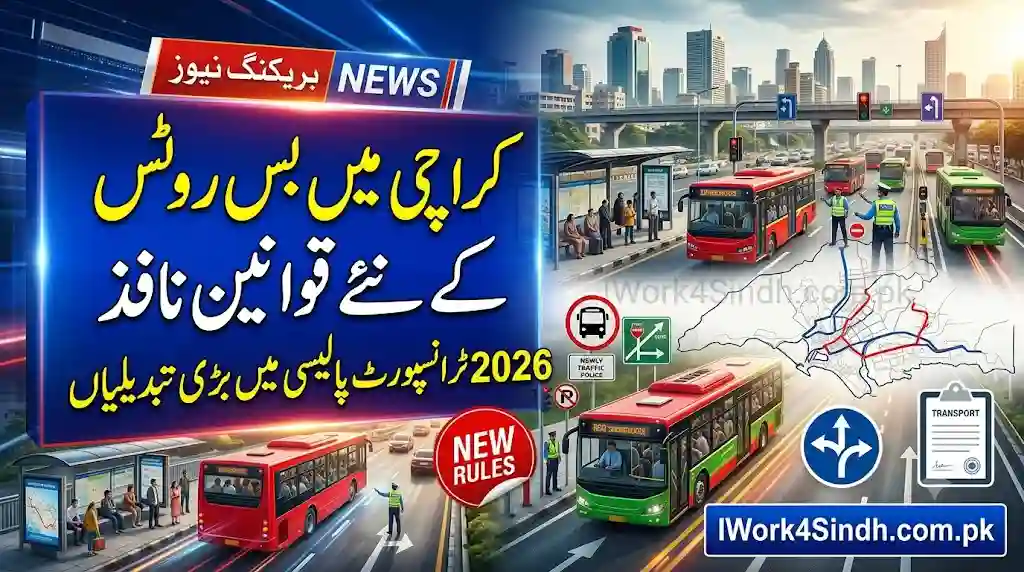
Karachi Plans Changes to Bus Route Policy 2026 – New Transport Rules Explained
Karachi is getting ready for a big change in how its buses run. City officials have started working on the Karachi Bus Route Policy 2026, a fresh plan to fix long-standing transport problems. This move comes as the Sindh government looks for better ways to serve millions of daily commuters.
Karachi is Pakistan’s largest city, and its transport system carries a huge daily load. For years, residents have complained about overcrowded buses, long waiting times, and routes that don’t match real travel needs. Now, with the New Transport Rules Karachi authorities are drafting, there is hope that things will finally improve.
Better public transport isn’t just about comfort. It affects how people get to work, school, and hospitals. A strong Karachi Public Transport system can also reduce traffic jams and pollution. This article explains what the new policy means, why it matters, and what commuters should expect.
Why the Government Wants a New Bus Route Policy
Karachi’s transport network has grown without much planning over the years. Many bus routes were approved based on old demand patterns, not today’s needs. As a result, some areas have too many buses, while others, especially suburbs, have almost none.
Current Transport Challenges
Traffic congestion is one of the biggest issues in the city. Roads are often jammed, especially during peak hours, and buses get stuck in the same traffic as cars and rickshaws. This makes travel times unpredictable for everyone.
Passenger Complaints
Karachi Commuters have long complained about overcrowded buses, unsafe driving, and routes that skip important areas. Many people, especially those living in outer parts of the city, struggle to find reliable transport to reach the city center.
Need for Better Route Planning
Officials from the Commissioner’s office and the Sindh Transport Department recently held meetings to review these problems. During discussions, it was decided that the existing bus route system needs to be rationalised so that permits match actual commuter needs, particularly in suburban areas that currently lack adequate service.
Major Changes Expected in Karachi Bus Route Policy 2026
The proposed Bus Route Changes 2026 aim to reshape how buses move across the city. While full details are still being finalized, several key areas are already under discussion.
Route Optimization
Authorities plan to review and adjust existing routes so buses cover areas with real passenger demand. Officials have also directed that unnecessarily long-distance routes within the city be discouraged, since these can reduce operational efficiency and slow down service for everyone.
Better Connectivity
A major goal of the policy is to link different parts of the Karachi Bus Network more smoothly. This includes improving access for suburban residents who currently have limited transport options.
New Transport Regulations
As part of the plan, bus route permits are expected to be aligned more closely with actual commuter transportation needs. This means permits may be reviewed and adjusted, rather than staying fixed for years without change.
Improved Passenger Safety
Safety has become a growing focus for Sindh’s transport planners, especially as new bus services, including women-focused services, expand across the province.
Digital Route Monitoring
Modernizing traffic management is also part of the bigger picture. The city has been working on computerizing traffic signals at major intersections, a step that supports smarter, more coordinated transport planning across Karachi.
Integration with BRT and Other Transport Systems
Karachi already runs several Bus Rapid Transit (BRT) lines, including the Green Line and the Edhi Orange Line, which was recently connected to the Green Line to expand coverage from Orangi Town toward Nagan Chowrangi. The new policy is expected to further integrate regular bus routes with these BRT corridors, making transfers easier for passengers.
Benefits for Daily Passengers
If implemented well, the Karachi Bus Route Policy 2026 could bring real relief to daily riders.
- Reduced travel time: Better-planned routes mean fewer detours and less time stuck in traffic.
- Easier transfers: Integration between regular buses and BRT lines could make switching between services simpler.
- Better accessibility: Suburban areas that currently lack service may finally get regular bus routes.
- Lower transportation costs: More efficient routes can reduce the number of buses or rickshaws people need to use for one trip.
- Improved service quality: Newer buses, including electric and double-decker models already arriving in the city, are expected to raise overall comfort and reliability.
Impact on Bus Operators
The new rules won’t only affect passengers. Bus operators across the city will also see changes.
Licensing Changes
Operators may face updated licensing conditions as authorities work to align route permits with actual demand instead of outdated approvals.
Route Allocation
Some operators could see their routes adjusted, especially if their current paths overlap heavily with other services or avoid high-demand suburban areas.
Compliance Requirements
As safety and monitoring rules tighten, operators will likely need to meet stricter standards for vehicle condition, driver conduct, and route adherence.
Technology Adoption
With digital monitoring becoming part of the plan, operators may need to adopt new tracking or reporting tools to stay compliant with the updated system.
Role of Sindh Transport Department
The Sindh Transport Department sits at the center of this entire effort. Its responsibilities cover several stages of the policy process.
Planning
The department has prepared the broader Karachi Mobility Project, which serves as a guiding framework for route rationalization and long-term transport planning.
Monitoring
Officials, including the Regional Transport Authority (RTA), are tasked with overseeing how routes are issued and used, making sure permits reflect real passenger needs.
Implementation
Turning policy into action requires coordination between the Transport Department, traffic police, and city administration, especially for infrastructure like traffic signals and BRT integration.
Public Consultation
Effective policies usually involve some level of public input. As the plan develops, feedback from commuters and transport unions is likely to shape final decisions.
Challenges in Implementing the New Policy
Despite good intentions, rolling out a citywide Urban Transport System upgrade is never simple.
- Infrastructure limitations: Many roads still lack proper lanes, stops, or signals needed to support smoother bus operations.
- Funding: Large-scale transport projects require significant investment, and budget constraints can slow progress.
- Traffic issues: Karachi’s overall congestion problem won’t disappear overnight, even with better route planning.
- Public awareness: Commuters need clear information about route changes, or confusion could reduce the benefits.
- Coordination among departments: Success depends on cooperation between the Transport Department, traffic police, and city government, which can sometimes be difficult to manage.
What Karachi Citizens Should Expect
Timeline
While official meetings and reviews are already underway in 2026, a full rollout of the new policy will likely happen in phases rather than all at once.
Possible Route Adjustments
Residents, especially in suburban areas, may notice new or modified routes as authorities work to close service gaps.
Public Feedback
As with past transport initiatives, citizens may get opportunities to share concerns or suggestions as the policy takes shape.
Future Transport Improvements
Alongside route changes, Karachi is also expecting more electric buses, double-decker services, and expanded BRT coverage in the coming months, all part of a broader push to modernize Karachi Traffic Management.
Frequently Asked Questions (FAQs) About Bus Route Changes 2026
1. What is the Karachi Bus Route Policy 2026?
It is a planned update to how bus routes are approved and managed in Karachi, aimed at better matching services with commuter demand.
2. Why is Karachi changing its bus route policy?
The city faces traffic congestion, passenger complaints, and outdated routes that don’t serve current travel patterns, especially in suburban areas.
3. Will bus fares increase under the new policy?
No official fare changes have been confirmed as part of this route policy; the focus so far is on route planning and connectivity.
4. How will the new rules affect bus operators?
Operators may face updated licensing, revised route allocations, and new compliance or technology requirements.
5. When will the new bus routes start operating?
An exact date hasn’t been announced yet, as the policy is still being reviewed and finalized by the Sindh Transport Department.
Karachi Bus Route Policy 2026 Conclusion
The Karachi Bus Route Policy 2026 represents an important step toward fixing the city’s long-standing transport problems. By focusing on route optimization, better connectivity, and integration with BRT systems, the plan aims to make daily travel easier for millions of residents.
Challenges around funding, infrastructure, and coordination remain, and full implementation will likely take time. Still, this policy shows a clear intent to modernize Public Transport Policy Pakistan-wide, starting with Karachi. Commuters are encouraged to stay updated through official Sindh government announcements as more details on routes and timelines become available.