LESCO Faces Allegations of Overbilling Bribery and Illegal Power Cuts 2026
The Lahore Electric Supply Company (LESCO) is facing allegations related to electricity overbilling, bribery, and illegal power cuts. These issues are important for electricity consumers who depend on a regular power supply and expect accurate bills and fair treatment from the relevant authorities.
Electricity is an essential part of daily life in Pakistan. Households need it for lighting, cooking, cooling, and other basic activities, while businesses depend on it to continue their operations. When consumers face unexpected bills, power interruptions, or demands for illegal payments, they may experience financial difficulties and inconvenience.
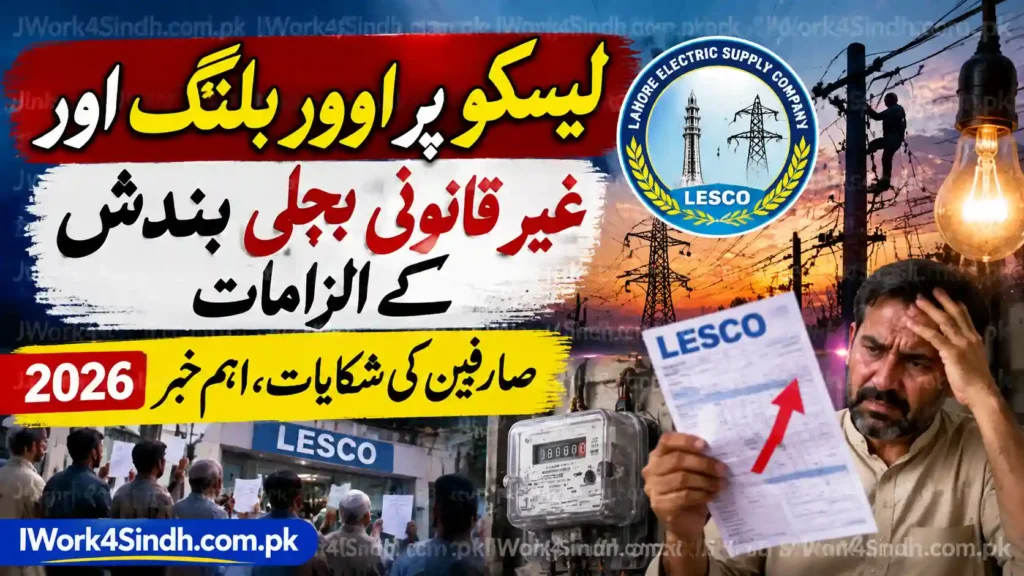
The allegations against LESCO highlight the importance of transparency, accountability, and better customer service in the electricity distribution system. However, individual allegations need to be investigated, and responsibility should be determined through proper procedures.
What Are the Allegations Against LESCO?
LESCO provides electricity to consumers in Lahore and several surrounding areas. Like other electricity distribution companies, it is responsible for supplying electricity, issuing bills, maintaining distribution infrastructure, and addressing consumer complaints.
The current headline highlights three major concerns: electricity overbilling, alleged bribery, and illegal power cuts. Consumers who experience these problems should keep relevant records and use official complaint channels to report their concerns.
It is important to note that allegations do not automatically establish wrongdoing. Each complaint should be reviewed according to the available evidence and applicable rules.
1. Electricity Overbilling Complaints
LESCO overbilling complaints are a concern for consumers who believe their electricity bills do not match their actual consumption. Electricity bills can increase because of higher usage, seasonal demand, tariff changes, taxes, adjustments, or meter-related problems.
However, consumers may also notice unusual readings, incorrect meter information, or unexpected charges that require further investigation.
Customers should carefully review their monthly electricity bills before making payments. They should compare the current bill with previous bills and check the recorded meter reading.
Consumers can take the following steps if they believe they have received an incorrect bill:
- Check the reference number and consumer details.
- Compare the current meter reading with the reading printed on the bill.
- Review the billed units and billing period.
- Keep copies of previous electricity bills.
- Photograph the meter reading for documentation.
- Submit a complaint through the appropriate official channel.
- Request a review if the bill contains an apparent error.
These steps can help consumers explain their concerns clearly and provide useful information during the complaint investigation.
2. Allegations of Bribery and Illegal Payments
Another concern mentioned in the headline is alleged bribery. Consumers may report concerns about unofficial payments during electricity connection applications, meter replacement, billing disputes, or other service-related matters.
Such allegations should be handled carefully. A claim of bribery requires appropriate evidence and investigation before any individual or department can be held responsible.
Consumers should avoid making unofficial payments for services that should be handled through established procedures. They should request official receipts for legitimate charges and keep copies of applications, payment records, and correspondence.
If someone demands an unofficial payment, the consumer can document the date, location, nature of the demand, and any available supporting evidence. The complaint should then be submitted to the relevant official complaint or anti-corruption authority.
LESCO bribery allegations should be investigated through a transparent process. If misconduct is established, the responsible individuals should face action under the applicable rules.
3. Complaints About Illegal Electricity Disconnections
Electricity disconnections can create serious difficulties for households, shops, offices, and industrial units. Consumers may be concerned when their power supply is disconnected unexpectedly or when they believe the action was taken without following the applicable procedure.
However, electricity disconnections can occur for different reasons, including unpaid bills, safety concerns, technical faults, or other reasons permitted under relevant regulations.
Consumers who believe their connection has been disconnected incorrectly should first review their account status and contact the relevant LESCO office.
They should ask for clarification about the reason for disconnection and the steps required to restore the supply. If the explanation is unsatisfactory, they can submit a formal complaint and request a review.
Keeping written records is important because these documents can help establish the sequence of events and support a consumer’s case.
How LESCO Consumers Can Register Complaints
Consumers who experience billing errors, suspected misconduct, or electricity supply problems should use official complaint channels rather than relying only on verbal discussions.
The complaint process generally involves explaining the problem, providing consumer information, attaching supporting documents, and requesting a clear resolution.
Customers should prepare the following information before submitting a complaint:
- Electricity bill reference number.
- Name and contact details of the registered consumer.
- Complete address of the electricity connection.
- Description of the problem.
- Relevant billing or payment records.
- Meter readings or photographs, where applicable.
- Copies of previous complaints and responses.
Consumers should also keep any complaint tracking number or acknowledgment provided by the relevant office.
For unresolved electricity complaints, customers may explore the complaint procedures available through the National Electric Power Regulatory Authority (NEPRA) or other competent authorities, depending on the nature of the issue and the applicable procedure.
Responsibilities of Electricity Consumers
Consumers also have responsibilities under the electricity supply rules. Paying legitimate bills on time, protecting electricity meters, reporting faults, and providing accurate information can help reduce disputes.
Customers should not interfere with meters, tamper with electricity equipment, or use unauthorized connections. Such activities can create safety risks and may result in penalties under applicable regulations.
If a bill appears incorrect, consumers should challenge it through the proper process instead of assuming that every increase is an error.
Similarly, electricity supply interruptions should be reported with accurate information about the location, time, and nature of the problem.
A clear complaint supported by documents can make it easier for the relevant department to review the matter.
Why Transparency and Accountability Matter
Transparency is important for maintaining public trust in electricity distribution companies. Consumers expect accurate billing, reliable electricity supply, clear communication, and fair treatment when they contact customer service offices.
LESCO can help improve consumer confidence by making complaint procedures easier to understand, providing timely responses, and ensuring that billing and disconnection decisions follow the applicable rules.
Effective monitoring can also help identify recurring problems, improve staff performance, and reduce unnecessary disputes between consumers and service providers.
Where credible allegations of bribery or other misconduct arise, an impartial investigation can help establish the facts. Appropriate action should follow when evidence supports a violation.
At the same time, complaints should be assessed individually so that employees and consumers receive fair treatment.
What Should Consumers Do If Their Complaint Is Not Resolved?
If a consumer has already contacted LESCO but has not received a satisfactory response, the next step is to review the available escalation process.
Consumers should retain copies of their original complaint, supporting documents, payment receipts, and any response received from the company.
They can then check whether the matter qualifies for escalation to the relevant regulatory or complaint-handling authority.
Before filing a complaint with another department, customers should review the applicable eligibility requirements, submission method, and any deadlines.
It is also important to use verified contact information from official sources. Consumers should avoid sharing their CNIC details, account information, or other sensitive information with unknown individuals claiming to offer complaint resolution services.
Electricity Consumer Rights Pakistan Conclusion
The allegations concerning LESCO overbilling, bribery, and illegal power cuts in 2026 highlight several issues that matter to electricity consumers. Accurate billing, fair service procedures, reliable electricity supply, and transparent complaint handling are essential for protecting consumer interests.
Consumers who experience billing errors or suspected misconduct should document their concerns and report them through the appropriate official channels. They should keep copies of bills, meter readings, payment records, and complaint references.
At the same time, allegations must be distinguished from proven findings. A fair investigation based on evidence is necessary to determine whether any rules have been violated and what action may be appropriate.
Improved accountability, clear communication, and an effective complaint resolution system can help strengthen public confidence in electricity distribution services and provide consumers with a clearer way to resolve their concerns.