
ML-1 Project to Significantly Reduce Karachi-Peshawar Travel Time
Pakistan’s railway network is on the verge of its biggest transformation in decades, and the ML-1 Project sits at the heart of that change. Once completed, this ambitious railway modernization plan is expected to reshape how millions of people and tonnes of cargo move between Karachi and Peshawar. For a country where road travel is often slow, congested, and unpredictable, a modern, high-speed rail corridor could be a game-changer for passengers, traders, and the national economy alike.
What Is the ML-1 Project?
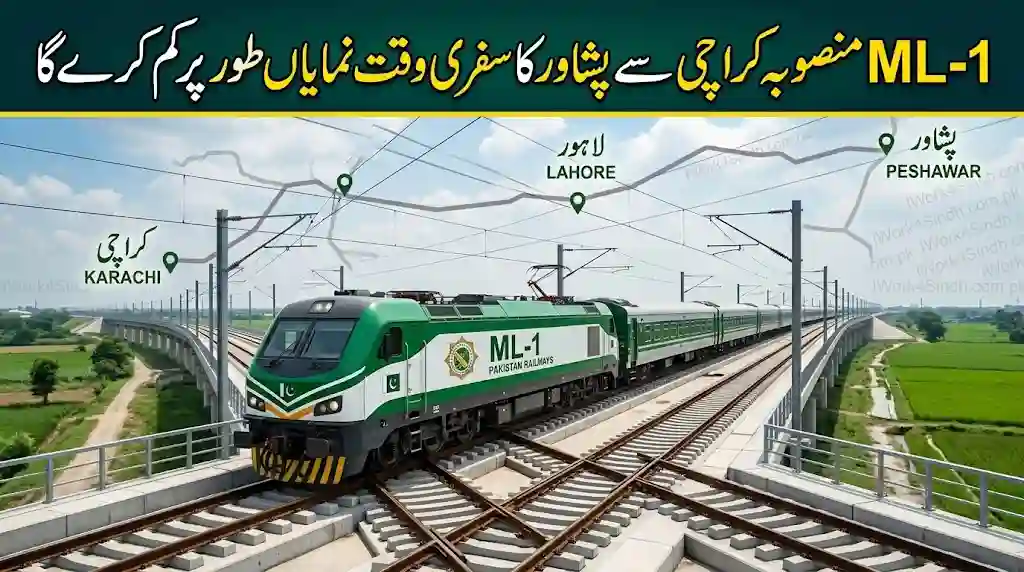
The ML-1 railway project, short for Main Line-1, refers to the upgrade of Pakistan’s oldest and busiest railway corridor, stretching roughly 1,733 kilometres from Karachi to Peshawar. This line forms the backbone of Pakistan Railways, carrying the bulk of the country’s passenger and freight traffic.
In simple terms, the Main Line-1 project involves rebuilding old, worn-out tracks, installing modern signaling systems, and upgrading stations and bridges along the entire route. Much of the existing infrastructure dates back decades and was not designed for the speeds or traffic volumes that today’s Pakistan requires. The ML-1 project Pakistan initiative aims to bring this critical corridor up to modern international standards.
The project was originally planned as part of the China-Pakistan Economic Corridor (CPEC), with an estimated cost of around $6.6–7.7 billion. In 2026, however, the government announced that ML-1 would be pursued separately from CPEC, with financing now being sought from the Asian Development Bank (ADB) and other multilateral lenders such as the World Bank, the Asian Infrastructure Investment Bank, and the Islamic Development Bank, after financing talks with Chinese lenders did not conclude. The first phase, covering the roughly 480-kilometre Karachi-Rohri section, is being prioritized, with officials targeting an estimated cost of around $2–2.5 billion for this segment.
How ML-1 Could Reduce Karachi-Peshawar Travel Time
Upgraded tracks, better-aligned curves, and stronger rail beds would allow trains to run at higher and more consistent speeds instead of slowing down repeatedly due to weak infrastructure. Modern signaling and communication systems would also reduce delays caused by manual coordination and outdated equipment.
It is important to note that official, confirmed travel-time figures for the completed ML-1 corridor have not yet been finalized publicly for every phase. What has been consistently stated by officials is that the project is expected to reduce Karachi-Peshawar travel time, improve punctuality, and increase overall train speeds once implemented in full. Readers should treat any specific hour-by-hour travel-time claims as estimates rather than confirmed figures until Pakistan Railways issues official operational schedules after construction.
Major Features of the ML-1 Railway Project
Several core components define this large-scale railway modernization in Pakistan:
- Track rehabilitation and upgrading, replacing aging rails with modern, higher-capacity tracks.
- Modern signaling and communication systems, replacing manual or outdated systems with digital, automated controls.
- Improved railway stations and infrastructure, including better platforms, safety features, and passenger facilities.
- Better operational efficiency, reducing unnecessary halts and improving scheduling.
- Capacity improvements for both passenger and freight trains, allowing more trains to run safely and efficiently along the corridor.
Benefits for Passengers
For everyday travelers, a modernized Karachi to Peshawar train service could mean shorter, more comfortable, and more predictable journeys. Fewer breakdowns and derailments—an ongoing concern on parts of the existing network—would also mean improved safety standards.
Better infrastructure typically supports smoother rides, reduced overcrowding through added capacity, and more reliable arrival and departure times. For families, students, and business travelers who rely on rail as an affordable alternative to air or road travel, these improvements could make a noticeable difference in day-to-day convenience.
Economic Impact of ML-1
Beyond passenger comfort, the Pakistan Railways ML-1 upgrade carries significant economic weight. Efficient freight transportation is central to trade competitiveness, and a modern railway corridor could reduce the cost and time of moving goods between Karachi’s ports and northern industrial and commercial hubs.
Improved connectivity along this corridor could support businesses, boost trade activity, and open opportunities in sectors like manufacturing, agriculture, and logistics. Tourism could also benefit from more comfortable and time-efficient travel options. Additionally, construction and long-term operation of the upgraded line are expected to generate employment opportunities across various skill levels.
Impact on Karachi, Lahore, Rawalpindi, Peshawar and Other Cities
The Karachi Peshawar railway corridor passes through several of Pakistan’s most important urban and commercial centers, including Hyderabad, Multan, Lahore, Rawalpindi, and Peshawar. Each of these cities stands to gain from improved rail connectivity, whether through better access to markets, smoother commuter options, or enhanced logistics for local industries.
A modern national railway network doesn’t just benefit the endpoints of the line—it strengthens the entire economic corridor by linking regional economies more efficiently than fragmented road transport alone.
ML-1 and the Future of Pakistan Railways
The ML-1 initiative represents more than a single infrastructure upgrade; it is central to the long-term vision for Pakistan railway upgrade efforts nationwide. A modernized main line could serve as the foundation for future expansions, additional feeder lines, and broader efforts to shift both freight and passenger traffic away from congested roads and onto rail.
Over time, this could contribute to a faster train service in Pakistan across multiple corridors, not just the Karachi-Peshawar route, positioning rail as a more competitive and sustainable transport option.
Challenges and Implementation
Like any large infrastructure undertaking, ML-1 faces real challenges. Securing adequate and timely financing has already proven complex, with the project’s funding structure shifting from CPEC financing to multilateral lenders during 2026. Other challenges include coordinating construction across a long and busy corridor without excessive disruption to existing services, managing land and right-of-way issues, and ensuring strong project management to avoid delays and cost overruns.
Given the scale of the project, phased implementation—starting with the Karachi-Rohri section—appears to be the practical approach, allowing lessons learned in early phases to inform later stages of construction.
Karachi Peshawar travel time Conclusion
The ML-1 Project remains one of the most significant railway modernization efforts in Pakistan’s history. While final, official travel-time figures for the completed corridor are still to be confirmed, the project’s core goals are clear: upgraded tracks, modern signaling, improved stations, and greater capacity, all aimed at making rail travel between Karachi and Peshawar faster, safer, and more reliable. If implemented successfully, ML-1 could reshape passenger convenience, strengthen freight transportation, and support economic activity across the cities it connects—cementing its place as a cornerstone of Pakistan’s future railway network.