Supreme Court Birthright Citizenship Case: Key Highlights of Today’s SCOTUS Ruling
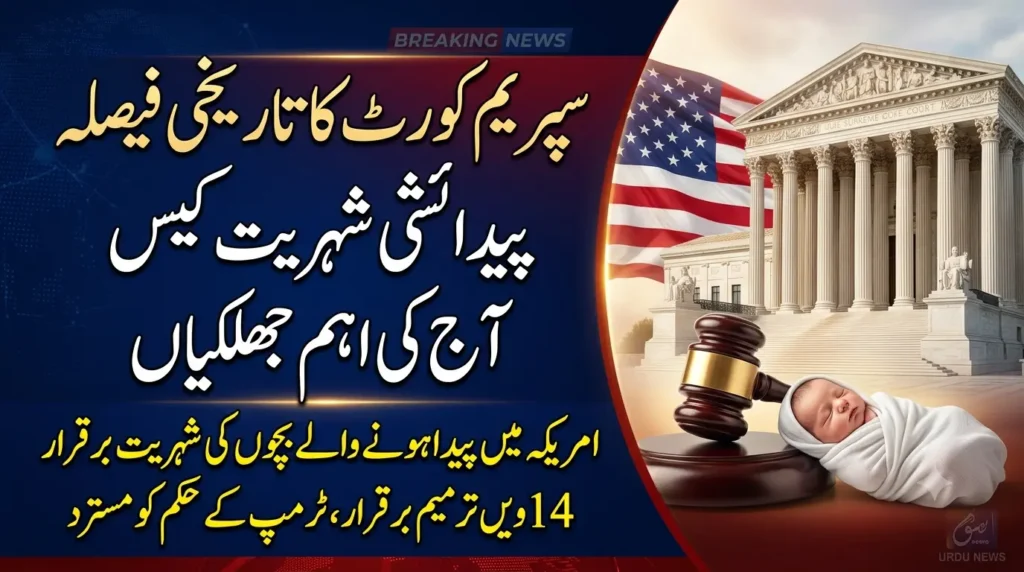
The United States Supreme Court (SCOTUS) has ruled that children born in the United States are American citizens, even if their parents are not U.S. citizens or do not have legal immigration status. This decision is a major victory for birthright citizenship in America.
The ruling came after former President Donald Trump tried to limit birthright citizenship through an executive order. The Supreme Court rejected this effort and said the U.S. Constitution protects the right of most children born in the country to become citizens automatically.
What Is Birthright Citizenship?
Birthright citizenship means that a child becomes a U.S. citizen simply by being born in the United States. This right comes from the 14th Amendment of the U.S. Constitution, which was adopted in 1868.
Why Was This Case Important?
President Trump argued that children born to undocumented immigrants or temporary visitors should not automatically receive U.S. citizenship. His administration said the Constitution should be interpreted differently.
However, many legal experts and civil rights groups said that birthright citizenship has been a long-standing constitutional right for more than 125 years.
Key Highlights of Today’s SCOTUS Ruling
1. Birthright Citizenship Stays in Place
The Supreme Court ruled that children born in the United States remain U.S. citizens, regardless of their parents’ immigration status.
2. Trump’s Executive Order Was Rejected
The Court blocked the executive order that tried to limit automatic citizenship for certain children born in America.
3. The 14th Amendment Was Upheld
The justices said the Constitution clearly protects birthright citizenship and follows the long-standing legal interpretation of the amendment.
4. The Court Followed an Old Precedent
The ruling relied on the famous 1898 case, United States v. Wong Kim Ark, which confirmed that most children born in the U.S. are citizens at birth.
5. The Decision Could Affect Thousands of Families
Experts said that limiting birthright citizenship could have affected hundreds of thousands of children born in the United States every year.
Why This Decision Matters
This ruling protects a constitutional right that has existed for generations. It also brings certainty to many immigrant families living in the United States. Legal experts say the decision is one of the most important immigration rulings in recent years.
Final Thoughts
Today’s Supreme Court decision is a major moment in American legal history. The Court made it clear that birthright citizenship remains protected under the U.S. Constitution. Children born in the United States will continue to receive American citizenship at birth, keeping a long-standing constitutional principle in place.