Government Seeks Rs. 450 Billion Private Investment for Major Railway Track Upgrade
Pakistan’s railway network is set to undergo a major transformation as the government moves to attract Rs. 450 billion railway investment from the private sector. The initiative centers on the planned upgrade of a key stretch of the country’s main railway line, an ageing corridor that has long struggled with deteriorating infrastructure and frequent operational disruptions.
This proposed investment reflects a broader shift in how Pakistan intends to finance large-scale infrastructure development, moving beyond traditional public funding models toward greater collaboration with private stakeholders. For a network as vital as Pakistan Railways, the timing of this initiative could not be more significant.
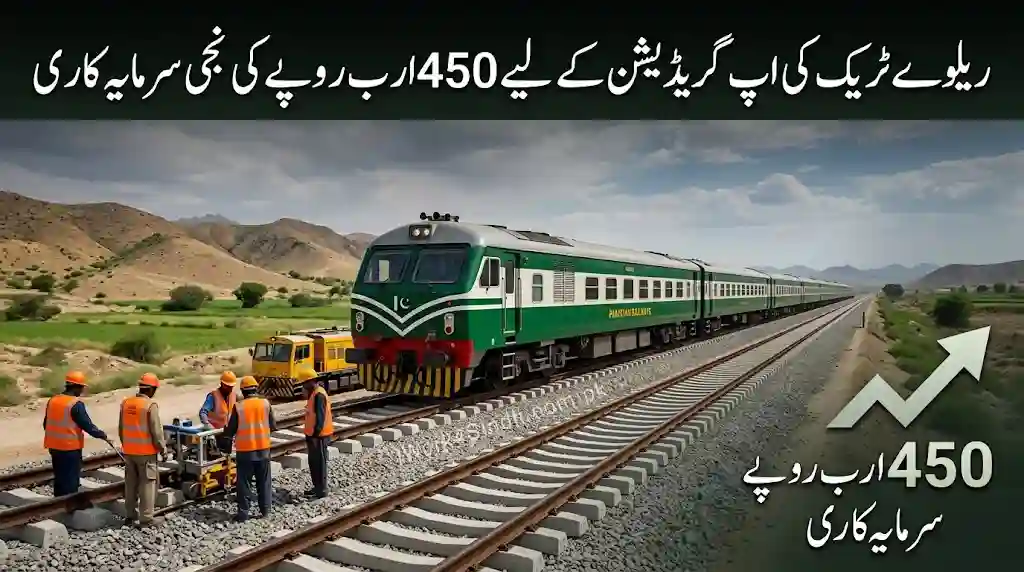
Government Plans Rs. 450 Billion Railway Investment
According to recent developments, authorities are actively exploring private financing options after international partners indicated they would not fully fund the entire mainline upgrade project on their own. As a result, attention has shifted toward domestic private investment as a viable alternative for the section requiring urgent rehabilitation.
The Pakistan railway infrastructure in question has reportedly suffered from years of underinvestment, with officials noting a troubling history of derailments and accidents linked to the poor condition of the tracks. This has added urgency to the government’s push to secure alternative financing and move the planned upgrade forward without further delay.
A committee tasked with exploring financing options has been reviewing proposals, including one from a state-linked engineering organization interested in developing the corridor through private capital. While the exact structure of the deal is still being finalized, the proposed investment signals a serious commitment to overhauling this critical transport link.
Why Railway Track Modernization Is Important
Railways form the backbone of long-distance freight and passenger movement in Pakistan, yet much of the existing track infrastructure was built decades ago and has not kept pace with growing demand. A railway track upgrade in Pakistan is essential not only to prevent further safety incidents but also to restore public confidence in rail travel as a reliable transportation option.
Outdated tracks force trains to operate at reduced speeds, increasing journey times and raising maintenance costs. Modern, well-maintained rail infrastructure would allow Pakistan Railways to run trains more efficiently, reduce the risk of accidents, and better serve both passengers and businesses that depend on rail freight.
Safety and Reliability Concerns
Ageing tracks are more prone to structural wear, which can lead to derailments and service interruptions. Addressing these vulnerabilities through railway modernization is a priority not just for operational efficiency but for the safety of thousands of daily commuters and freight operators.
Role of Private Investment in Railway Development
Private investment in railways has increasingly become a preferred model for governments seeking to modernize transport infrastructure without placing the entire financial burden on the public exchequer. By inviting private capital into large-scale projects, the government aims to accelerate development timelines while sharing financial risk with capable private partners.
This approach also opens the door to specialized engineering expertise, modern construction techniques, and more efficient project execution — factors that could significantly improve outcomes compared to conventional public-sector-only financing.
Diversifying Funding Sources
Relying solely on foreign loans or public sector development funds can slow down infrastructure delivery, especially when external financing commitments face delays or reductions. Bringing in private investors for railway development projects allows the government to diversify its funding base and reduce dependency on any single financing source.
Expected Benefits for Passengers and Freight
If successfully implemented, the planned upgrade could bring a range of benefits to both everyday commuters and the freight and logistics sector.
Potential improvements include:
- Reduced travel times through better track quality and higher permissible train speeds
- Enhanced passenger comfort and fewer service disruptions
- Improved reliability for freight operators moving goods across the country
- Reduced risk of accidents and derailments along the upgraded section
- Better integration with national trade and logistics networks
For freight transportation in particular, a modernized rail corridor could offer a more cost-effective and dependable alternative to road transport, easing pressure on highways while supporting industries that rely on bulk cargo movement.
Public-Private Partnership Opportunities
The government’s exploration of public-private partnership in railways reflects a broader global trend where infrastructure projects are increasingly financed through collaborative models involving both state institutions and private enterprises. Under such arrangements, private entities may contribute capital, technical expertise, or operational management, while the government retains regulatory oversight.
For a project of this scale, a well-structured PPP framework could help ensure that financing responsibilities, risk-sharing arrangements, and long-term maintenance obligations are clearly defined from the outset. This clarity is often essential to attracting credible investors who require confidence in project viability before committing significant capital.
Building Investor Confidence
Transparent bidding processes, clear regulatory frameworks, and predictable returns are typically necessary to make railway infrastructure investment attractive to private players. Without these elements, even well-intentioned projects can struggle to secure the funding they need.
Impact on Pakistan’s Economy and Connectivity
Beyond the immediate benefits to rail operations, the broader economic implications of this initiative are considerable. A modernized railway network can support industrial activity by making it easier and cheaper to move raw materials and finished goods across provinces.
Improved rail connectivity also tends to support regional trade, as businesses gain more reliable access to ports, markets, and production hubs. Over time, this can contribute to job creation, both during the construction phase of the railway track upgrade in Pakistan and through the long-term operational needs of a modernized network.
Additionally, easing pressure on the country’s road network by shifting more freight to rail could reduce road maintenance costs and traffic congestion, indirectly benefiting the wider economy.
Challenges and Implementation Considerations
While the potential benefits are significant, large infrastructure initiatives of this nature come with their own set of challenges. Ensuring transparency throughout the bidding and contracting process will be critical to maintaining public trust and attracting credible investors.
Equally important is rigorous project planning, including realistic timelines, sound feasibility assessments, and clearly defined quality standards for construction and materials. Effective monitoring mechanisms will also be needed to ensure that work progresses according to plan and that any issues are identified and addressed promptly.
Given the scale of the Rs. 450 billion railway investment, coordination between government bodies, financial institutions, and private partners will play a central role in determining whether the project meets its intended goals within a reasonable timeframe.
Future of Pakistan Railways
Looking ahead, this initiative could serve as a template for how future infrastructure projects are financed and executed in Pakistan. If the government’s initiative proves successful, it may encourage similar private-sector participation in other sections of the national rail network that require modernization.
A more resilient and efficient Pakistan Railways system would not only improve day-to-day travel and freight operations but could also strengthen the country’s position as a logistics and trade corridor within the wider region, particularly for cross-border trade routes that depend on efficient inland transportation.
Pakistan Railways Upgrade Conclusion
The push to secure Rs. 450 billion railway investment from private sources marks a significant step in addressing long-standing infrastructure challenges within Pakistan’s rail network. By combining public oversight with private sector capital and expertise, the planned upgrade has the potential to deliver safer, faster, and more reliable rail services for passengers and freight operators alike.
Success will depend heavily on transparent processes, sound project planning, and consistent quality standards throughout implementation. If managed effectively, this railway modernization effort could mark a turning point for Pakistan railway infrastructure, supporting economic growth, strengthening regional connectivity, and laying the groundwork for a more modern and dependable transportation system for years to come.