
KP Government Plans Independent Power Grid and Transmission System – Latest Update
Khyber Pakhtunkhwa is once again in the spotlight over its long-standing ambition to control its own electricity infrastructure. Recent briefings to the provincial leadership have brought renewed attention to the KP Government Power Grid initiative, a plan aimed at giving the province greater command over how its abundant hydropower resources are transmitted and used. For a province that produces a major share of Pakistan’s hydroelectricity but has historically had limited say over how that power reaches consumers, the idea of an KP Independent Power Grid is being viewed as a potential turning point for the region’s economy and energy security.
This article looks at what is currently known about the plan, the reasoning behind it, and what it could mean for industries, households, and the provincial economy going forward.
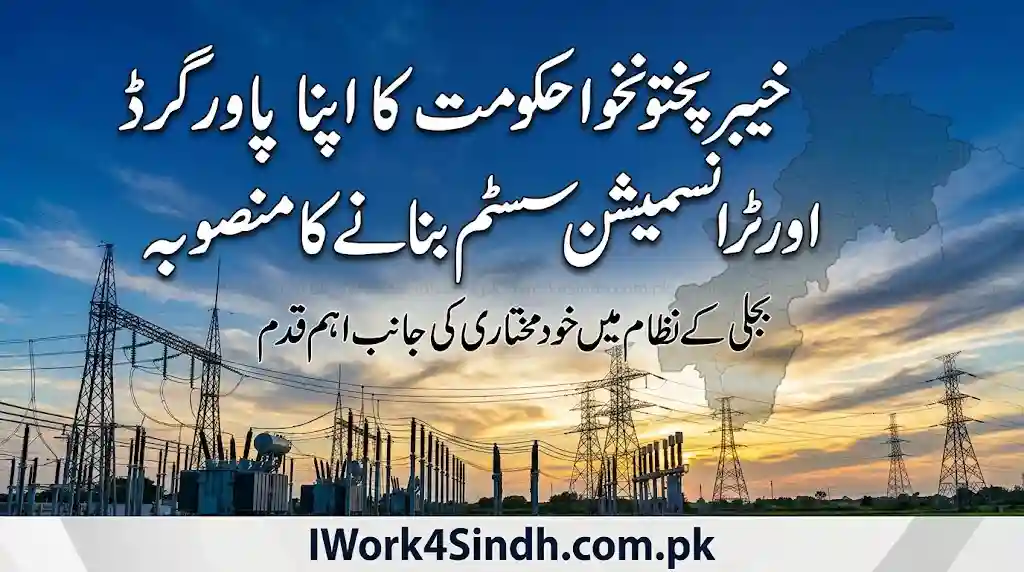
KP Government’s Plan for an Independent Power Grid
At the core of the discussion is a proposal to build a dedicated KP Power Transmission System that would allow electricity generated within the province to be moved directly to industrial zones and other consumers, rather than relying entirely on the national transmission network. Provincial authorities have been briefed on the status of ongoing initiatives in the energy and power sector, with directions given to prepare the transmission line project for presentation to potential investors.
It is important to note that this is a developing initiative. While the intent and direction are clear, specific details such as final costs, exact capacity figures, or firm completion timelines have not been officially confirmed and should not be assumed until formally announced by the relevant authorities.
Why KP Wants Its Own Power Transmission System
The push for Khyber Pakhtunkhwa Power Transmission infrastructure stems from a straightforward frustration: the province generates a large share of the electricity feeding Pakistan’s national grid, yet it has not had a dedicated system to move that power efficiently within its own borders. Officials have pointed out that the lack of a provincial transmission network has effectively forced KP to route its electricity through the existing federal system, limiting the province’s ability to supply cheaper, locally generated power directly to its own industries and consumers.
Provincial leadership has also raised the broader question of KP receiving its fair share of benefits from the natural resources located within its territory, arguing that a province contributing so heavily to national hydropower generation should have stronger involvement in how that electricity is managed and distributed.
Role of Hydropower in KP’s Energy Strategy
KP hydropower projects sit at the heart of this entire strategy. Khyber Pakhtunkhwa is home to some of the country’s most significant hydel resources, and it has been noted that the province supplies more than 70 percent of Pakistan’s total hydropower generation to the national grid. This is a substantial contribution, and it underscores why provincial authorities believe a stronger provincial power system is justified.
To formalize its role in this space, KP established the KP Transmission & Grid System Company (KPT&GSC), which received a provincial grid licence from the National Electric Power Regulatory Authority (Nepra) some years ago, making Khyber Pakhtunkhwa the second province after Sindh to secure such a licence. This company has since been working on groundwork for electricity transmission in KP, including feasibility studies and progress on transmission line projects such as the Gorkin-Matiltan line, which is intended to connect hydropower generation sites to the wider grid.
How the New Transmission System Could Benefit Industries
One of the most talked-about aspects of this plan is its potential to unlock cheap electricity for industries based in KP. Hydropower is generally among the lowest-cost sources of electricity generation compared to fuel-based alternatives, and a dedicated transmission system could, in principle, allow industrial zones and economic zones within the province to draw power more directly from these local sources.
For manufacturers and export-oriented businesses, more predictable and potentially lower-cost electricity could ease production costs and improve competitiveness. Special economic zones being developed within the province are also expected to require dedicated power supply arrangements, which a functioning provincial transmission network could help support.
Expected Impact on Electricity Supply and Consumers
To understand why this matters, it helps to separate the three basic stages of getting electricity to a household or factory:
- Generation – producing electricity, for example at a hydropower dam or thermal plant.
- Transmission – moving that electricity over long distances through high-voltage lines and grid stations.
- Distribution – delivering electricity from local substations to homes, shops, and factories.
KP’s hydropower stations handle generation, but until now the province has depended largely on the national transmission network operated at the federal level to move that electricity around. A dedicated KP Power Transmission System would add a provincial layer to this chain, potentially reducing dependence on the national grid for internal distribution and improving how efficiently power moves from generation sites to end users.
If realized effectively, this could contribute to more reliable power distribution in KP, fewer transmission bottlenecks, and better overall utilization of the province’s generation capacity, which in some cases has gone underused due to evacuation constraints.
Challenges Facing the KP Power Grid Project
Despite the potential upside, building an independent transmission network is a complex undertaking, and several challenges are widely recognized in discussions around the KP energy sector.
Financing remains a central issue, since transmission infrastructure, grid stations, and high-voltage lines require substantial capital investment, whether through public funds, private investment, or a combination of both. Technical execution is another factor, as building and maintaining transmission lines across KP’s varied terrain, including areas with hydropower potential in more remote regions, requires careful engineering and long-term planning.
Coordination with federal authorities and entities such as the National Transmission and Despatch Company (NTDC) is also a recurring theme, given that any provincial system needs to interface with the national grid in a technically compatible and regulated manner. Regulatory approvals from bodies like Nepra, along with ensuring grid stability and long-term maintenance of new infrastructure, will also be important considerations as the project moves forward.
Future of Electricity and Energy in Khyber Pakhtunkhwa
Looking ahead, the broader vision behind these KP government energy plans appears to be one of greater provincial energy management, with the province seeking a more active role in how its natural resources are converted into economic benefit. Beyond hydropower, KP is also a significant contributor to Pakistan’s crude oil and LPG production, and provincial authorities have indicated an interest in taking up resource-related matters with the federal government through a more structured mechanism.
If the transmission and grid initiatives continue to progress, they could open the door to new investment opportunities in the province’s energy sector, along with associated employment and economic activity tied to construction, operation, and maintenance of new infrastructure.
Latest Update on KP Power Transmission Plans
As of the most recent briefing, the provincial leadership has been updated on the status of the transmission and grid project, with instructions issued to prepare the initiative for presentation at an upcoming investors’ conference. This suggests the province is moving toward actively seeking investment partners, though the project remains at a developmental stage rather than a completed one.
For now, readers should treat this as an evolving story. The direction is clear: Khyber Pakhtunkhwa wants greater control over how its electricity is transmitted and distributed, driven largely by its outsized contribution to national hydropower generation. However, specific figures related to cost, capacity, and timelines have not been formally finalized, and further official updates are expected as the project develops.
KP Electricity Update Conclusion
The KP Electricity Update reflects a province trying to translate its natural hydropower advantage into tangible economic benefit through better infrastructure. Whether through the continued work of the KP Transmission & Grid System Company or new transmission line projects being prepared for investor interest, the broader goal is consistent: reduce reliance on external transmission networks, support industrial growth with more accessible power, and strengthen the province’s role in Pakistan’s overall energy landscape. As the plan progresses, industries, consumers, and policymakers alike will be watching closely for the next set of official announcements.